Hari Karthikkeyyan Avatar

Hari Karthikkeyyan

Testing website

Smash Guys - Burger Kitchen started with a simple idea, to bring world-class smashburgers to our city. We built the brand in public, with our journey shared step by step on YouTube, from idea to opening night. This isn’t just a restaurant, it’s a story we’ve shared with our community from day one.

All Posts (53)
About us

RAKESH Periodontist

Dr Rakesh Chandran is a Specialist in Periodontics, Implantology and Oral Medicine. He completed undergraduate dental training in India, at the MGR Medical University in 2001. While working as a general practitioner, he completed two Master’s Degrees in the field of Dental Public Health (University of the Western Cape) and Oral Pathology (University of Witwatersrand) and a certificate course in Oral Implantology (University of Pretoria).

His third Master’s Degree, in the field of Periodontics, Implantology and Oral Medicine was completed in 2017 (Sefako Makgatho Health Sciences University).

Throughout his years of training and practice, he has developed an effective approach in serving his patients at the highest level of professionalism.

His practice will always provide the finest periodontal and implant treatment and care, through continuing professional education, research contacts and use of the latest technology.

Contact us for an appointment.

NICOLE Oral hygienist

Nicole Smit completed her degree in Bachelor of Oral Health at the University of Western Cape (UWC) in 2020.

Her absolute passion is people and has always strived to have a career where she can work with people. She is gentle and empathetic with each of her patients and her main aim is to make them feel comfortable and at ease.

She is passionate about oral hygiene and considers her job as a platform to make a positive impact in people’s lives. Nicole is very calm and empathetic, and her patients love her and are comfortable in her care.

Nicole excels in her role in helping our patients sustain the level of oral health they have achieved through treatment. She is thorough, yet gentle, a talent that our patients welcome.

LILA Oral hygienist

Lila’s passion lies in leaving others with a big smile whilst educating all on the importance of oral hygiene and overall dental health.

Described as a people’s person who connects very well with young and old, someone who has a flair for making patients feel comfortable and at ease, along with a keen eye for detail and perfection.

TAYLOR Receptionist

Taylor Haley Avent has a passion for making people feel welcome and cared for. She is the fun and welcoming face that will greet you when you arrive at the office.

She is the friendly voice over the phone and she handles your appointments and reminders. She is dedicated to helping each patient with all their needs and making your visit to the office seamless.

ASH Treatment coordinator

Ash Voges is a warm and gentle soul, her key responsibility is the assigning of patient appointments for treatment.

She will ensure that your bookings are stress free and scheduled accordingly. She is always happy to answer all treatment related queries and provide feedback in a timeous manner.

TAMARA Practice manager

Tamara has been our firm foundation and has helped build the practice from the ground up! She liases with referring dentists and specialists whilst facilitating a seamless treatment experience for our patients.

Working closely with the periodontist, to ensure that the practice runs smoothly and for patients to receive the best out of their experience with Joburg Dental.

Tamara is extremely skilled in assisting patients who have dental benefits to obtain the maximum reimbursement from their insurance companies.

Meache Dental assistant

Meaché olivier is originally from Worcester in the western cape. She moved to Johannesburg in 2023 and found her new home away from home in Joburg Dental.

She became a certified dental assistant after receiving her education from the cape peninsula university of technology in 2022.

Meaché is kind and compassionate and she takes pride in her work. She is a caring person who understands the need to work effectively as part of the wider dental team and to act in the best interests of patients.

One of the most rewarding things for her in this position is all of the knowledge she receives everyday.

Outside of the office, Meaché enjoys spending time with her significant other, working out, trying new restaurants, hanging out with close friends and cooking. She also enjoys traveling as often as possible to visit her family.

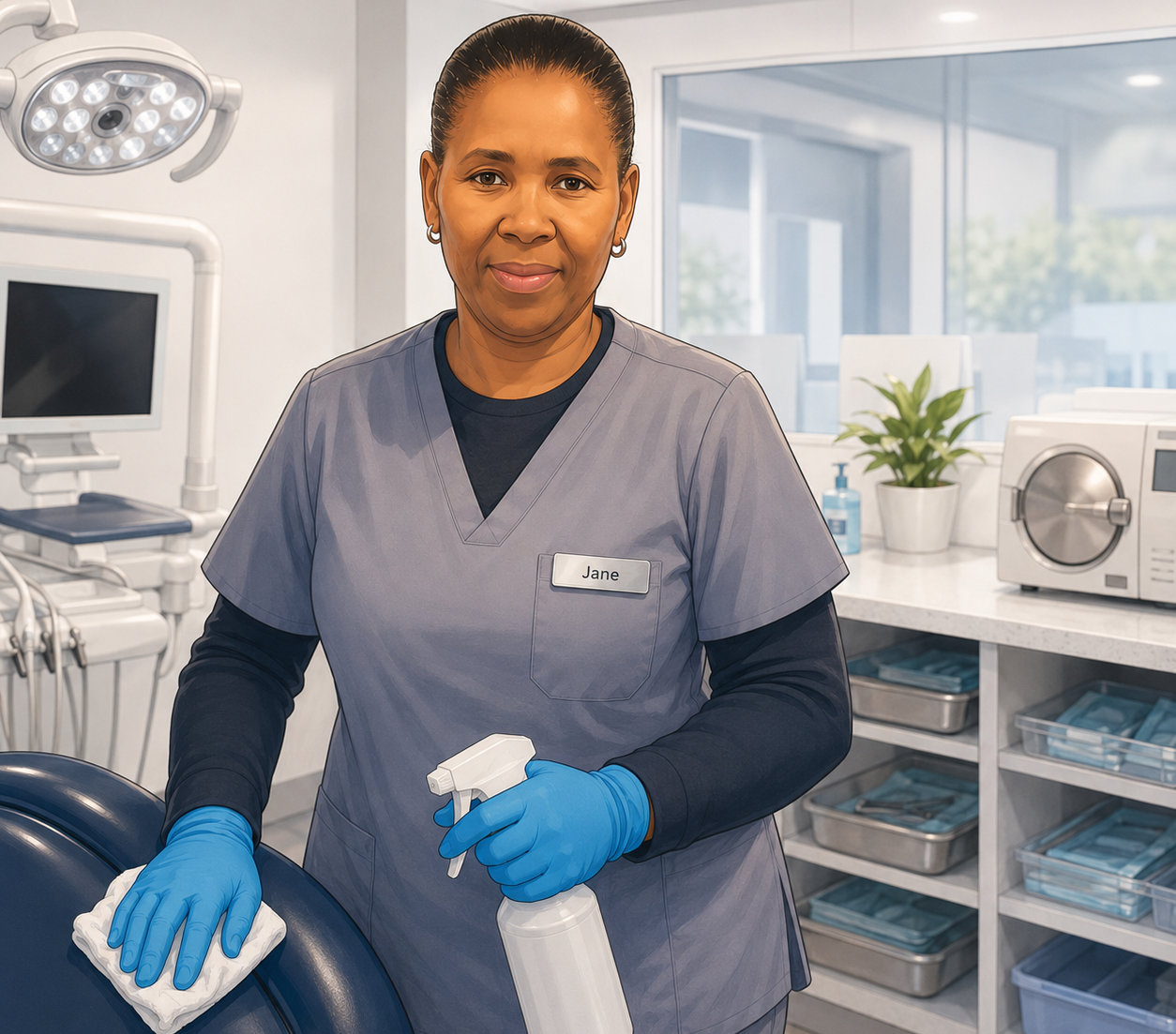
JANE Infection control nurse

Jane Mathebe has the most important role of all, she ensures that the environment is sterile and all areas of the practice are clean and disinfected.

Read More
Tue Aug 04 2026
Full Mouth Dental Implants

JOBURG DENTAL - Full Mouth Dental Implants

Regain your smile, confidence, and the ability to eat comfortably in a calm, specialized environment

WHY PATIENTS TRAVEL TO JOBURG DENTAL FOR FULL-MOUTH IMPLANT REHABILITATION

Specialist-Led Care
Your treatment is planned and performed by a Specialist Periodontist with extensive experience in full-mouth implant rehabilitation.

Comprehensive Diagnosis
Every case begins with a clinical examination, CBCT scan and comprehensive digital planning. We recommend treatment based on your anatomy, bite and long-term prognosis rather than a one-size-fits-all approach.

Our Preferred Treatment Approach
For most suitable patients we recommend either an All-on-4 or All-on-6 rehabilitation. The choice depends on your bone volume, anatomy and long-term prosthetic requirements. Our goal is to provide the most predictable, functional and maintainable solution for each individual.

Digital Planning & Stackable Surgical Guides
Every full-mouth rehabilitation is digitally planned using BlueSkyBio software for the highest level of accuracy. Where appropriate, we fabricate and 3D print stackable surgical guides in-house, allowing precise implant placement according to the planned prosthetic outcome while improving efficiency and predictability.

Premium Implant System
We use premium implant systems, including Neodent implants from the Straumann Group. These implants are internationally recognised, supported by extensive clinical research and benefit from worldwide component availability.

Transparent Pricing
We provide detailed written treatment plans and honour our treatment estimates. Our maximum fee for a straightforward full-arch rehabilitation is R230,000 per arch, including the anaesthetist.

Designed for International Patients
We recommend an initial stay of approximately one month, allowing adequate review appointments before returning home. Most patients are able to undertake long-haul international travel 7–10 days after surgery. The final prosthesis is generally fitted after a healing period of at least four months.

Ongoing Support
We remain available for remote support after you return home and are happy to liaise with your local dentist.

Patient Experiences
Many patients have shared their experiences through our Google Reviews. With prior consent, selected patients may also be happy to speak with prospective patients considering similar treatment.

Our Philosophy
We treat every patient as we would a member of our own family. Our goal is to provide a comfortable, functional and natural-looking smile designed to last for many years with appropriate maintenance.

Book your implant consultation today and receive a personalised treatment plan.

WHAT ARE THE STEPS IN DENTAL IMPLANT PLACEMENT

Consultation & Planning
Clinical exam, 3D imaging (CBCT), and digital scans are required to fabricate a surgical guide for precise implant placement

Surgical Placement
Titanium implants are placed into the jawbone under local anaesthesia and/or sedation.

Healing & Integration
Osseointegration (bone fusing to the implant) typically takes 2–4 months.

Final Restoration
Once stable, an abutment and custom crown/bridge/denture are attached. In most cases, temporary or final teeth can be placed immediately.

FULL MOUTH DENTAL IMPLANTS

All on 4
The All on 4 solution is designed to provide a permanent, cost-effective answer for patients dealing with bone loss or seeking a streamlined treatment. By maximizing your available bone, this technique restores complete oral function using just four strategic implants. With an impressive 98.5% success rate, this revolutionary approach often allows you to receive a full arch of beautiful, functional teeth in just one day—offering a lasting solution for your smile."

All on 6
All-on-6 is a fixed implant solution designed to replace all teeth in a jaw using six dental implants to support a full arch of teeth. By increasing the number of implants, this approach provides greater load distribution, enhanced stability, and added long-term support, particularly in patients with adequate bone volume.

All-on-6 is often recommended for patients who want a more robust foundation for their final teeth, or where increased chewing forces, bone quality, or long-term durability are key considerations. As with All-on-4, a fixed set of teeth may be placed on the same day in suitable cases, with a definitive restoration provided after healing.

SMILE IN A DAY
Immediate fixed teeth, followed by a definitive long-term solution.

Smile in a Day refers to an advanced implant treatment approach where dental implants and a fixed set of temporary teeth are placed on the same day , allowing you to leave with a functional smile immediately after surgery.

This technique is suitable for selected patients and is carefully planned using 3D imaging to ensure implant stability and safety. While the initial teeth provide immediate function and appearance, a final, long-term restoration is placed after proper healing.

Schedule a Personal Implant Review
Includes 3D scan and personalised treatment planning.

Regain chewing comfort, confidence and a complete smile. Contact us to find out if dental implants are right for you. Call 011 718 3333 or Book Online Today .

COST OF DENTAL IMPLANTS IN SOUTH AFRICA

The total cost depends on:

  • Number and type of implants
  • Need for additional procedures (bone grafting/sinus lift)
  • Type of restoration (crowns, bridges, over dentures)

Single dental implants from R30, 000 to R35,000

Full-arch implant solutions from R150,000 to 230,000 per jaw

Implant treatment is highly individual. Prices vary depending on clinical requirements and are confirmed after assessment. Implant treatment is highly individual. Prices vary depending on clinical requirements and are confirmed after assessment.

Regain chewing comfort, confidence and a complete smile. Contact us to find out if dental implants are right for you. Call 011 718 3333 or Book Online Today .

Page updated

Report abuse

Read More
Tue Aug 04 2026
Dental Implants

WHAT IS A DENTAL IMPLANT

A dental implant is a small titanium post that is surgically placed into your jawbone, where it acts as a replacement for the root of a missing tooth. The implant provides a strong and stable foundation for a replacement tooth or bridge. The artificial teeth/ tooth (prosthesis) is custom made to attach to the dental implant. The artificial teeth are attached to the implants after the implants have integrated with the bone which usually takes 2 to 4 months. The process thus involves and surgical phase and a restorative phase. In some instances, the implant and the artificial teeth can be provided on the same day.

Dental implants replace missing tooth roots and support fixed replacement teeth. Fixed, natural-looking teeth that let you eat, speak, and smile with confidence—without removable dentures.

WHY CHOOSE JOBURG DENTAL?

  • Precision implant placement – Planned using 3D CBCT technology
  • Long-lasting results – High-quality implants built to last
  • Natural look and function – Designed to match your bite and smile
  • No more dentures – Secure, fixed teeth with no slipping or discomfort
  • Comfort-focused care – Minimally invasive techniques and gentle aftercare
  • Experience: Hundreds of implants placed successfully
  • A reputation built on patient recommendations and trust.
  • Flexible payment options – Financing available to make treatment accessible

Book your implant consultation today and receive a personalised treatment plan.

MAIN ADVANTAGES OF TREATMENT WITH IMPLANTS

ESTHETICS

Implants provide an option that are not only natural looking, but help stop the process of bone resorption which happens when the patient loses a full tooth (crown and root) and which can change the appearance of the face

DURABILITY

Implants are a solution designed to last a lifetime when maintained well.

MAINTAINING QUALITY OF CHEWING

Dental prostheses supported by implants improve chewing efficiency and effectiveness in addition to improving the patient's nutrition.

PRESERVATION OF THE PALATE

Covering areas of oral mucosa with removable prostheses interferes with the palate. This does not happen in the case of implants, which are more comfortable and can avoid the need to use removable prostheses.

PRESERVATION OF THE BONE STRUCTURE

The implants transmit the force of chewing to the jaw bone, thus helping to conserve it In the case of partial prostheses or conventional bridges, the bone gradually suffers resorption, which can change your facial expression.

Book your implant consultation today and receive a personalised treatment plan.

WHAT ARE THE STEPS IN DENTAL IMPLANT PLACEMENT

Consultation & Planning

Clinical exam, 3D imaging (CBCT), and digital scans are required to fabricate a surgical guide for precise implant placement

Surgical Placement

Titanium implants are placed into the jawbone under local anaesthesia and/or sedation.

Healing & Integration

Osseointegration (bone fusing to the implant) typically takes 2–4 months.

Final Restoration

Once stable, an abutment and custom crown/bridge/denture are attached. In most cases, temporary or final teeth can be placed immediately.

REPLACE ONE OR A FEW TEETH

Ideal for replacing a single missing tooth or several missing teeth using dental implants.

Benefits:

  • Restore the look, feel, and function
  • Does not require the reduction of adjacent teeth
  • Easy to clean

Not sure which option is right for you?

Book an assessment and we’ll recommend the best solution based on your goals, bone health, and budget.

FULL MOUTH DENTAL IMPLANTS

All on 4

The All on 4 solution is designed to provide a permanent, cost-effective answer for patients dealing with bone loss or seeking a streamlined treatment. By maximizing your available bone, this technique restores complete oral function using just four strategic implants. With an impressive 98.5% success rate, this revolutionary approach often allows you to receive a full arch of beautiful, functional teeth in just one day—offering a lasting solution for your smile."

All on 6

All-on-6 is a fixed implant solution designed to replace all teeth in a jaw using six dental implants to support a full arch of teeth. By increasing the number of implants, this approach provides greater load distribution, enhanced stability, and added long-term support, particularly in patients with adequate bone volume.

All-on-6 is often recommended for patients who want a more robust foundation for their final teeth, or where increased chewing forces, bone quality, or long-term durability are key considerations. As with All-on-4, a fixed set of teeth may be placed on the same day in suitable cases, with a definitive restoration provided after healing.

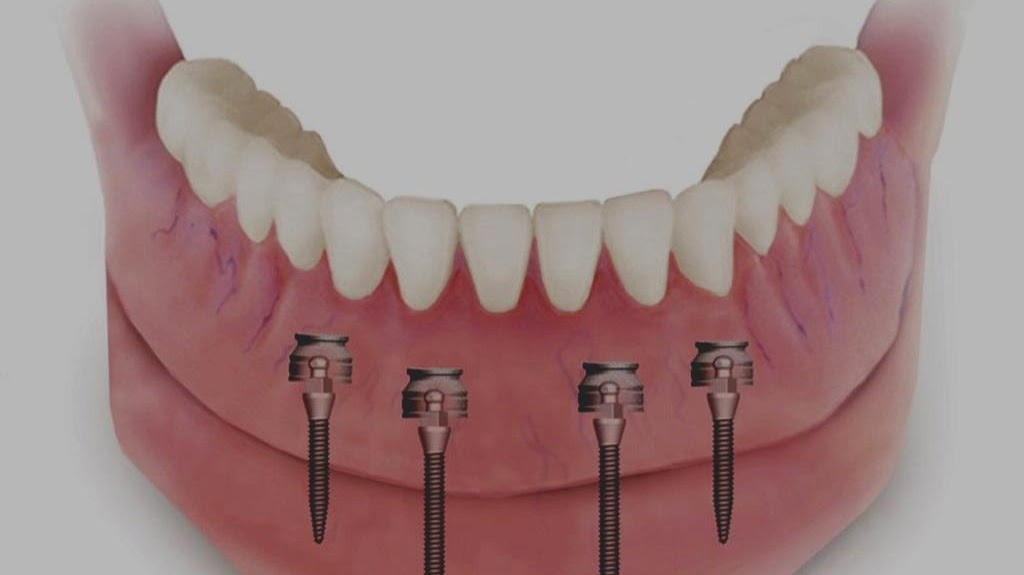
Mini-Implant Over denture

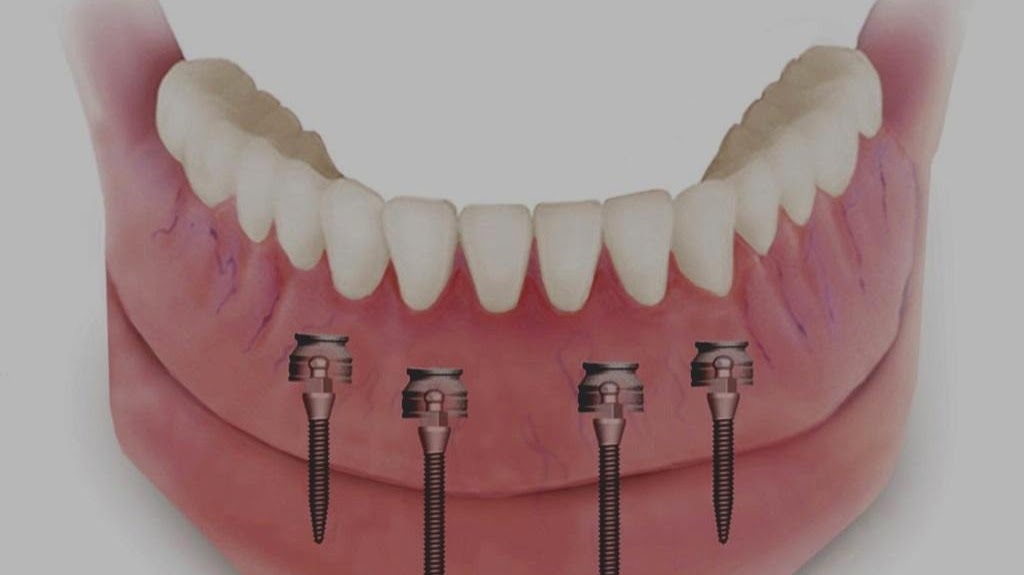
Mini dental implants are only recommended if the bone density and volume are inadequate to support a traditional denture. Since the diameter of the implants are smaller than the traditional implants, the risk of fracture is high. This option is usually used as a last resort.

Bar supported prosthesis

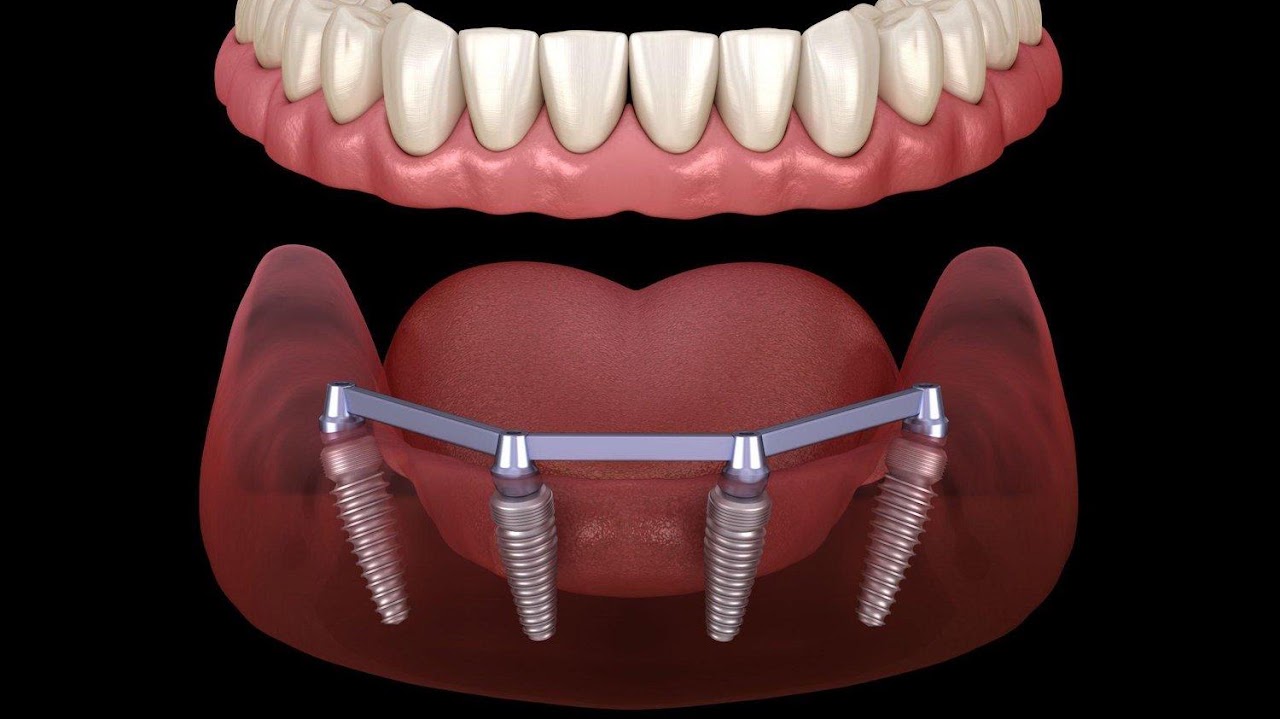
A bar-supported implant prosthesis is an implant-retained solution used to replace all teeth in a jaw by securing a custom-designed bar to multiple dental implants. The prosthetic teeth are then attached to this bar, providing excellent stability, comfort, and function compared to conventional removable dentures.

This option is particularly suitable for patients who require additional soft-tissue support, have complex jaw anatomy, or benefit from a prosthesis that can be removed by the clinician for maintenance while remaining firmly supported during daily function. The bar distributes chewing forces evenly across the implants, helping to protect both the implants and the surrounding bone over time.

Bar-supported prostheses can be designed as removable by the patient or fixed by the clinician, depending on the clinical requirements, bone support, and long-term maintenance considerations. Treatment planning is guided by detailed 3D imaging and careful assessment of function, hygiene access, and aesthetic needs.

SMILE IN A DAY

Immediate fixed teeth, followed by a definitive long-term solution.

Smile in a Day refers to an advanced implant treatment approach where dental implants and a fixed set of temporary teeth are placed on the same day , allowing you to leave with a functional smile immediately after surgery.

This technique is suitable for selected patients and is carefully planned using 3D imaging to ensure implant stability and safety. While the initial teeth provide immediate function and appearance, a final, long-term restoration is placed after proper healing.

Schedule a Personal Implant Review

Includes 3D scan and personalised treatment planning.

Regain chewing comfort, confidence and a complete smile. Contact us to find out if dental implants are right for you. Call 011 718 3333 or Book Online Today .

CONVERT AND EXISTING DENTURE TO FIXED TEETH

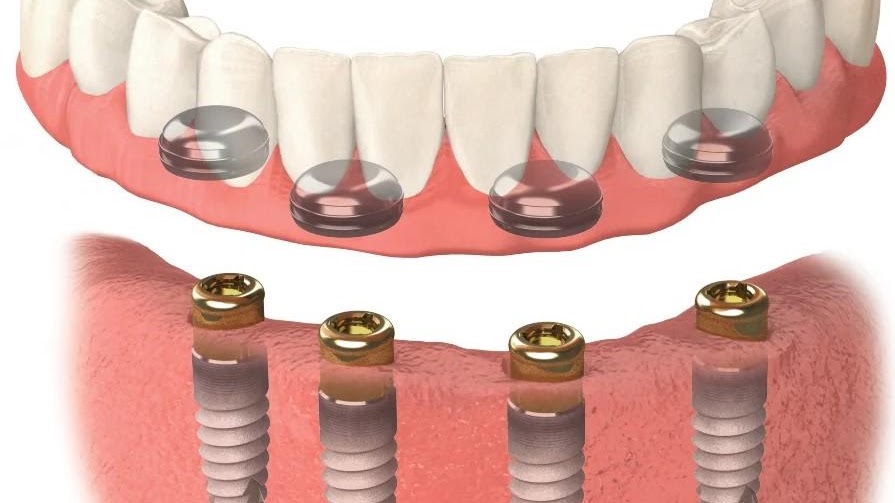
2 and 4 implant over dentures

Two implants can support a denture, but four implants would be ideal to support an overdenture prosthesis. This is becoming the standard of care, especially for patients struggling with their lower dentures. These are usually referred to as snap on dentures. The implants stabilize the denture from moving around when talking, eating and laughing. Patients can get rid of messy adhesives. In some cases, a special metal bar can be fabricated and attached to the 4 implants to give the utmost stability with a denture.

COST OF DENTAL IMPLANTS IN SOUTH AFRICA

The total cost depends on:

  • Number and type of implants
  • Need for additional procedures (bone grafting/sinus lift)
  • Type of restoration (crowns, bridges, over dentures)

Single dental implants from R30, 000 to R35,000

Full-arch implant solutions from R150,000 to 2 3 0,000 per jaw

Implant treatment is highly individual. Prices vary depending on clinical requirements and are confirmed after assessment. Implant treatment is highly individual. Prices vary depending on clinical requirements and are confirmed after assessment.

Regain chewing comfort, confidence and a complete smile. Contact us to find out if dental implants are right for you. Call 011 718 3333 or Book Online Today .

IMPLANT MAINTENANCE AND REPAIR

PERI IMPLANTITIS

Peri-implantitis is an inflammatory condition affecting the gum and bone around dental implants. If left untreated, it can lead to progressive bone loss and loss of the implant. Early diagnosis and specialist management are key to protecting both the implant and the surrounding tissues.

The common signs of Peri-Implantitis

Read More
Tue Aug 04 2026
Info

GENERAL QUERIES

What is going to happen at the first appointment?

Every patient is unique, and we are committed to providing you with high quality, state-of-the-art periodontal and implant care based on your individual needs. Above all else, we want to make your visit to our office a pleasant experience.

Your first visit will include the following:

  • An introduction to your doctor and team.
  • Review of your dental and medical history
  • Review of your dental x-rays and/or taking new x-rays or a 3D image as required
  • An examination focusing on your presenting needs and/or concerns

We will discuss our findings and answer any questions you may have about treatment. Our goal is to help you come to an informed decision regarding your care.

What is the cost of the consultation?

The cost of the initial consultation will be R850, this does not include the cost of the radiographs, however if you have had radiographs that were taken that are no older than 1 year, please feel free to share with us.

Are you contracted to medical aid?

We do not accept medical aid, however you will be issued with an invoice and receipt that may be used to claim.

This is with regards to the initial consultation and any further assessments, including procedures and/or X-rays

Do you do dentures or fillings?

Dr Chandran is a specialist periodontist, this means that the scope of practice is limited to periodontal and dental implant treatment. We do not provide restorations (fillings) or construct dentures.

What are your working hours?

Monday – Friday : 07H45 – 16H30

Saturday – Sunday : CLOSED

Read More
Tue Aug 04 2026
Reasoning Is Not Model Improvement

Reasoning Is Not Model Improvement

How tool use became a substitute for solving hard problems

When OpenAI released o1 in April 2024 and called it a "reasoning model," the industry celebrated a breakthrough. Finally, AI that could think step-by-step, solve complex problems, handle graduate-level mathematics.

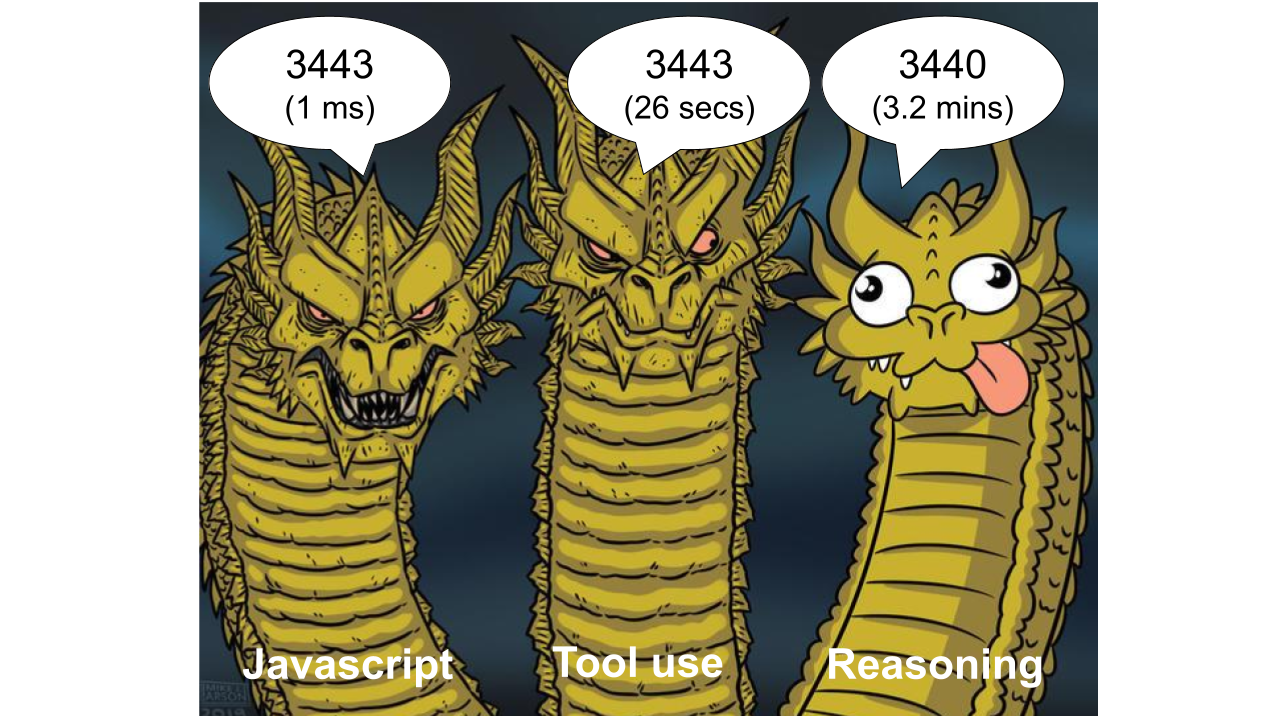
But look closer at what's actually happening under the hood. When you ask the latest model, ChatGPT-5 to multiply two large numbers, it doesn't calculate. It generates Python code, executes it in a sandbox, and returns the result. Unlike ChatGPT-3, which at least attempted arithmetic internally (and often failed), ChatGPT-5 delegates computation to external tools. [1]

This pattern extends everywhere. The autonomy in agentic AI? Chained tool calls like web searches, API invocations, database queries. The breakthrough isn't in the model's intelligence. It's in the orchestration layer coordinating external systems. Everything from reasoning to agentic AI is just a sophisticated application of code generation. These are not model improvements. They're engineering workarounds for models that stopped improving.

This matters because the entire AI industry (from trillion-dollar GDP projections to unicorn valuations) depends on continued model improvement. What we're getting instead is increasingly elaborate plumbing for fundamentally stagnant foundations.

GPT-5: The Emperor's New Reasoning

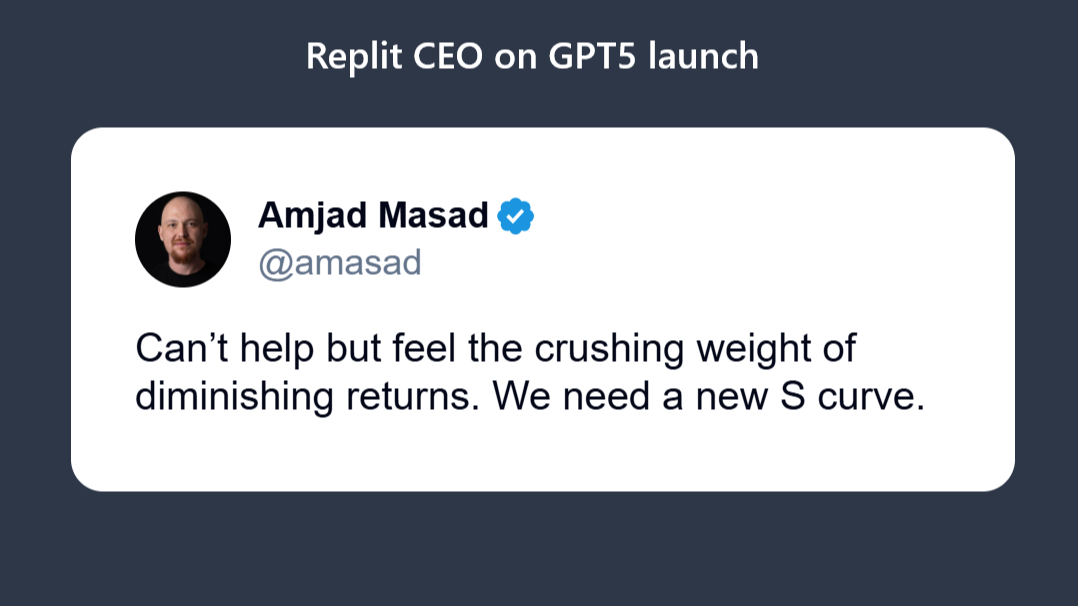
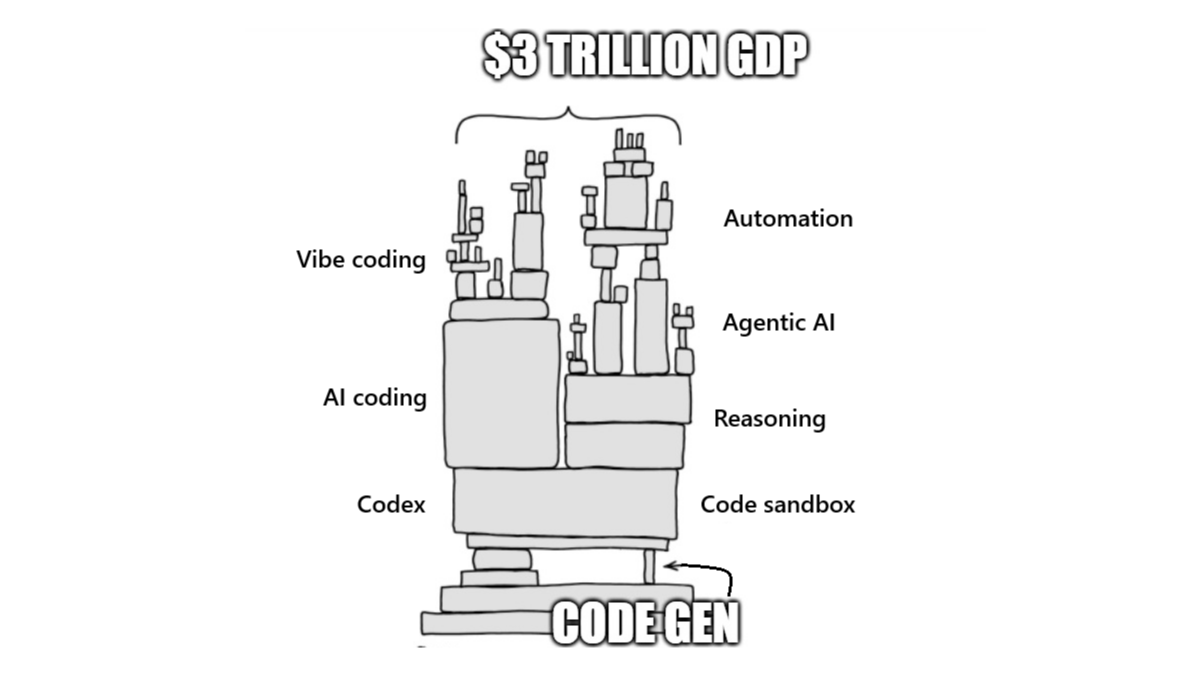
August 2025 should have been a triumph. OpenAI promised "PhD-level intelligence in everyone's pocket." What they delivered barely moved the needle on code generation, the one capability that everything else depends on. And that's the bottleneck: code generation is the kingpin. Better code → better reasoning (via execution) → better agents → higher productivity → trillion-dollar markets. When the kingpin doesn't move, the entire chain stalls.

The disappointment was palpable among developers using AI coding tools. AI coding tools building on OpenAI's models (like Cursor, Replit ) had bet billions on exponential improvement with each release. GPT-5 broke that pattern. This wasn't supposed to happen. From GPT-3's fumbling arithmetic to GPT-4's coherent code generation, progress seemed unstoppable. An entire industry had emerged betting on continued gains. But in the past year, that progress visibly stalled.

From Research Lab to App Store

In the meantime, OpenAI is leaning more on applications than on model research. Watch OpenAI's trajectory over just the past few months, and the pattern becomes undeniable:

October 6, 2025: ChatGPT Apps Launch

Third-party applications running directly inside ChatGPT. Book flights through Expedia, design graphics in Canva, browse real estate on Zillow without leaving the chat. The Apps SDK gives developers access to 800 million users. This is OpenAI becoming an app store.

October 21, 2025: Atlas Browser Release

An AI-powered web browser attacking Chrome's dominance. Browser memory, agent mode, integrated AI assistance throughout. This is OpenAI becoming a consumer products company.

They are slowly sliding from research to applications:

  • Reasoning models (adjacent to core research)
  • Agentic AI with workflow builders (further from core research)
  • ChatGPT Apps (pure distribution play)
  • Atlas browser (entrench ChatGPT in browser)

Each step moves further from "how do we build better models?" toward "how do we monetize the models we have?"

Why OpenAI Pivoted: Two Theories

So why would the world's leading AI lab pivot from research to applications?

Theory 1: They Hit a Wall and Won't Admit It

Scaling has stopped working. Despite billions in compute and the world's best researchers, qualitative improvements are disappearing. The models aren't getting fundamentally smarter: they're just getting better at coordinating external tools.

Rather than announce "we don't know how to make better models anymore," they pivot to monetization. ChatGPT Apps generate revenue without requiring research breakthroughs. A browser creates user lock-in without needing GPT-6. Applications buy time while they figure out what comes next. This is the pessimistic interpretation: stagnation disguised as strategy.

Theory 2: Applications Are Simply More Profitable

Training frontier models costs billions and takes years. Building apps on existing models is cheap and fast. The margins are better. The risk is lower. The path to revenue is clearer.

Maybe OpenAI rationally calculated that more money can be made from applications with less effort, and shifted resources accordingly. Why spend $5 billion training GPT-6 when you can build a browser in six months? This is the cynical interpretation: profit over progress.

Both might be partially true. Either way, the result is identical: the leading AI lab is investing less in fundamental model improvement precisely when the ecosystem needs it most.

The Architectural Problem Nobody Wants to Face

Tool orchestration is impressive engineering. Coordinating web searches, code execution, database queries, and API calls requires sophisticated software architecture. Agentic frameworks that manage complex workflows have genuine practical value. But none of this addresses why models need tools in the first place.

Earlier models like GPT-3 struggled with token fragmentation (for example, splitting "strawberry" into "straw" and "berry" which has different meaning). Modern tokenizers mitigate this, but the broader architectural issue remains: LLMs still lack true semantic understanding. These semantic issues are particularly problematic for code generation, where precision is critical. When models hallucinate facts or lose coherence over long contexts, adding web search doesn't solve the root cause. Fixed-size embeddings compress meaning losingly. Attention windows create hard boundaries on context. These are architectural constraints, not engineering problems.

It's like building a skyscraper on a foundation designed for a three-story building. You can add reinforcements, redistribute weight, install sophisticated support systems. But eventually, you need a different foundation. No amount of clever engineering around the foundation's limits will let you build taller.

What Actually Needs to Happen

The industry faces a choice, though most players are pretending it doesn't exist.

Path 1: Keep Optimizing the Plumbing

Continue the current trajectory: slightly larger models, more sophisticated tool orchestration, deeper integration into application platforms. Launch browsers and app stores. Build better agentic frameworks. Improve the engineering around architectural limitations.

This path offers predictable short-term revenue. This is true for many other domains that have not yet caught up to AI coding tool-level capability. Since AI coding tools were created by developers for developers, they understood the problem and how to solve it for themselves. The same kind of progress will happen in other domains, and the VC money train will continue for some time. But the $3 trillion GDP projection from a16z depends on a doubling of productivity, not the 20% improvement that has stalled in AI coding tools. Improving that requires admitting that the fundamental approach has stalled.

Path 2: Acknowledge We Need Different Foundations

Admit that scaling has hit limits. Invest in architectural innovations that address root causes rather than symptoms. This means:

  • Graph-based architectures that preserve structural relationships instead of fragmenting them through tokenization, preventing the semantic fragmentation that plagues transformer-based LLMs.
  • Sparse attention mechanisms that maintain longer contexts more efficiently.
  • Neuromorphic approaches inspired by biological neural organization.

The solution is to build architectures that preserve information rather than compress it losingly.

Current models are, as AI researcher Andrej Karpathy puts it, "lossy compression of the internet." Real progress requires moving toward lossless representation: preserving structure, maintaining relationships, keeping semantic hierarchies intact.

This path is expensive, uncertain, and slow. It requires admitting current approaches have failed. It means years of research with no guarantee of success. But it's the only path that actually addresses the problem rather than working around it.

Summary

Right now, the AI coding tool market is scaling explosively:

  • Cursor: $500M ARR in 15 months, $10B valuation
  • GitHub Copilot: millions of users, hundreds of millions in revenue
  • Windsurf: acquired for $2.4B
  • Dozens of startups raising nine-figure rounds

All betting on the same assumption: models will keep getting better at generating code. If that assumption is wrong, the entire market becomes a house of cards. The $3 trillion GDP projection evaporates. The unicorn valuations can't be justified. The productivity revolution gets postponed indefinitely.

Conversely, whoever solves the architectural problem wins everything. Even modest fundamental improvements would cascade through the entire ecosystem:

  • Better code generation → better reasoning (via execution)
  • Better reasoning → more capable agents
  • More capable agents → actual productivity doubling
  • Actual productivity doubling → the $3T market becomes real

The value creation would be astronomical. The question now is whether any lab will prioritize the hard path of fixing the foundation over the easy path of building apps on stagnant foundations. The answer will determine whether the $3 trillion productivity revolution is real or fantasy.

(What would an architectural innovation look like? In my next article, I will explore graph transformers that preserve semantic meaning rather than fragmenting it through tokenization . Regardless of whether that approach works, we need different foundations, not better engineering on top of the ones that have already failed.)

Notes:

[1] There are 2 ways to multiply numbers in GPT-5:

Python mode, which uses python sandbox as mentioned above

No tool mode, which uses internal reasoning

Python mode is approximately 2x more accurate than no tool mode in FrontierMath (26.3% vs 13.5% accuracy). Python mode is also 4x to 10x more cost effective than no tool mode.

The GPT-5 API uses no-tool mode by default (tools must be explicitly enabled in API calls), while ChatGPT UI likely uses Python mode by default since Advanced Data Analysis is enabled by default for all subscribers. This creates a significant cost optimization for OpenAI in the consumer product, while API users bear the full cost of inefficient reasoning unless they manually configure tool use.

Read More
Sun Aug 02 2026
From Lossy to Lossless Reasoning

From Lossy to Lossless Reasoning

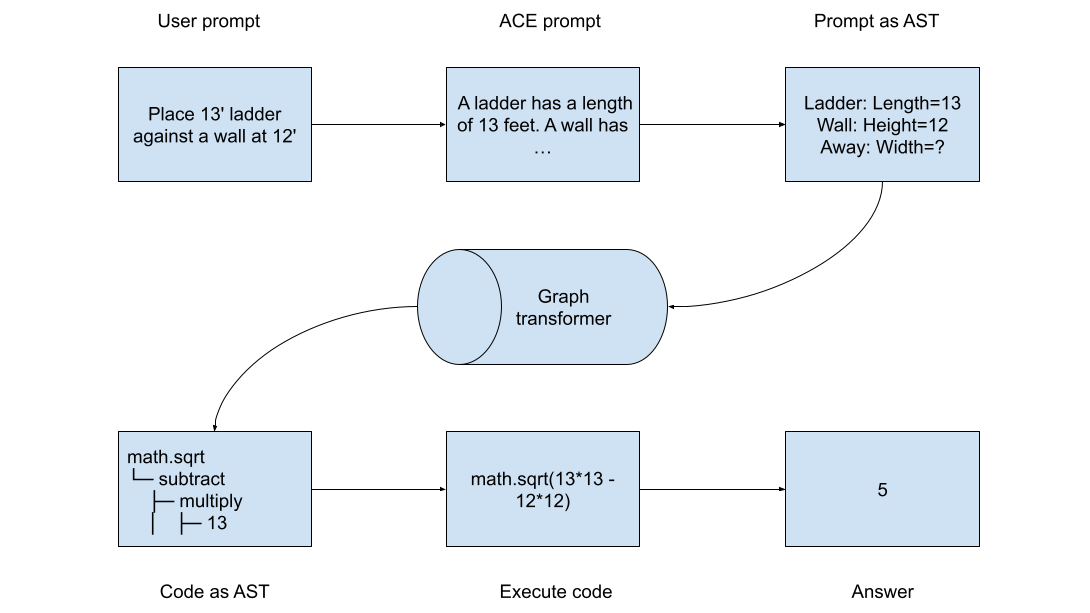
In my last post, I argued that code generation is not only used by AI coding tools like Cursor. It is the kingpin behind reasoning and all that is built on top of it (from agentic AI to AGI itself). For example, if you ask AI how to position a 13-foot ladder to reach exactly 12 feet up a wall, a reasoning model like GPT-5 uses the pythagorean theorem to calculate the answer: 5 feet from the wall. There are two ways it can do this:

Code generation mode (Tool use): Generate math.sqrt(13*13 - 12*12) and use Python as a tool to run it and return 5.

Pure reasoning mode (No tool use): If you ask GPT-5 not to use tools like Python, it will use internal reasoning to calculate the same.
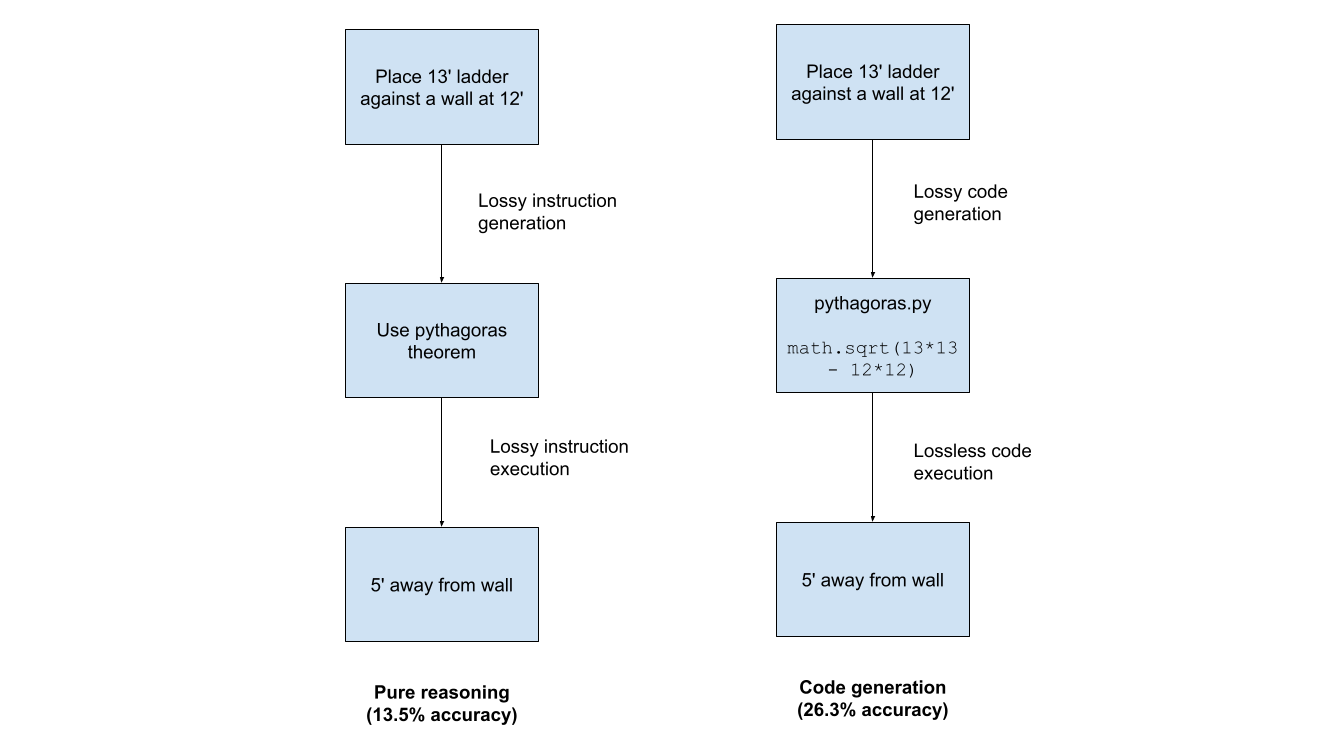
Pure reasoning uses statistical algorithms, so it isn't 100% accurate like Python. As tasks get more complex, errors compound dramatically. On FrontierMath (a benchmark of expert-level mathematics) pure reasoning achieves only 13.5% accuracy vs. 26.3% for code generation [1]. That's a 2x difference.

This reveals the core bottleneck: to improve reasoning, we need to improve how accurately models convert natural language into correct code. If you improve code generation for Cursor, you automatically improve reasoning in ChatGPT.
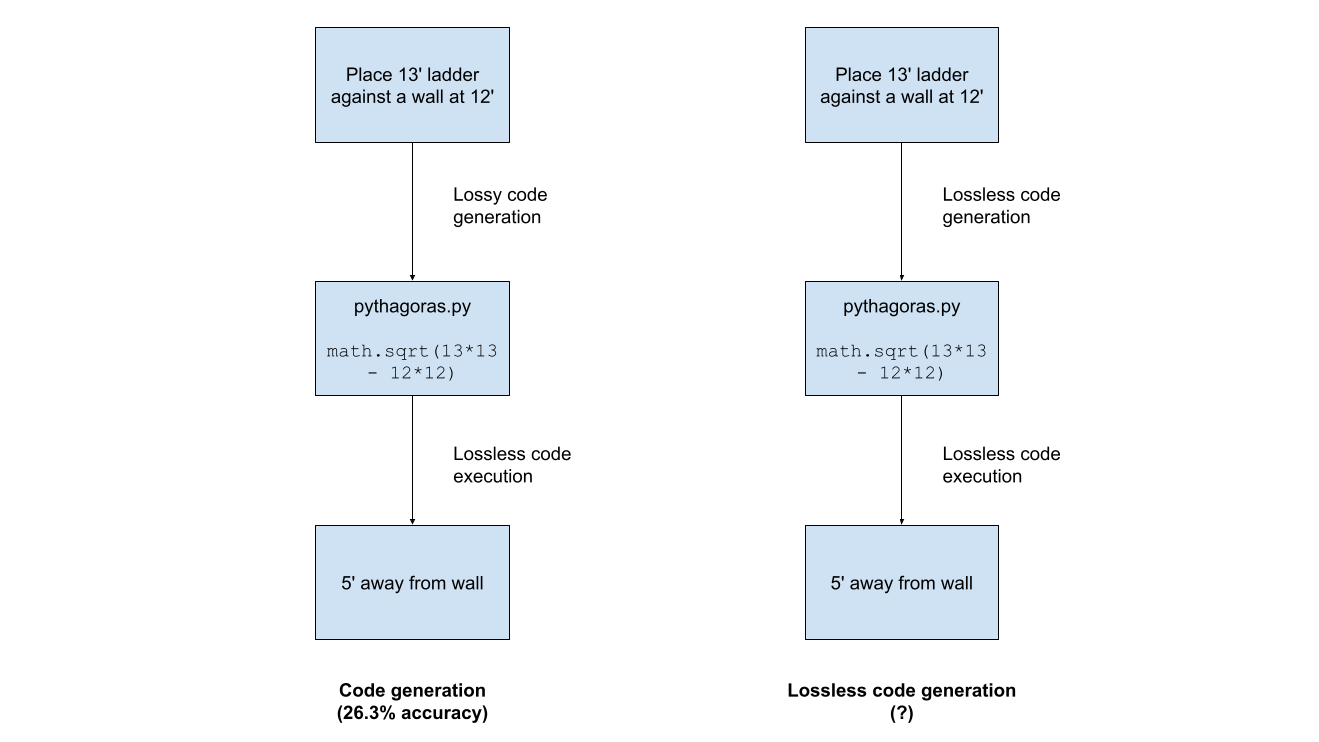
So the question becomes: how do you improve code generation accuracy? How do you convert place a 13' ladder against a wall at 12' into math.sqrt(13*13 - 12*12) with high reliability?

This article explores an approach by:

  • Parsing place a 13' ladder against a wall at 12' into an input graph
  • Parsing math.sqrt(13*13 - 12*12) into an output graph
  • Using graph transformers to convert the input graph into output graph

1. Parsing User Prompts into Input Graphs

Problem: Tokenization Fragmentation

Ask an AI model to count the letter "r" in the word "strawberry," and it will often get it wrong. This isn't a bug. It's a fundamental architectural limitation.

The problem occurs during tokenization, where text is split into chunks. Instead of treating "strawberry" as a single unit, the model splits it into ["straw", "berry"] or ["str", "aw", "berry"]. The model can count "r"s within each fragment, but not across the boundaries between them.

Modern tokenizers keep common words like "strawberry" as single tokens, but this fails with user-defined variables. For example, a variable named "ladlen" (short for "ladder length") gets split into ["lad", "len"], forcing the model to reconstruct meaning from fragments.

Solution: Prompt Rewriting Using ACE

Instead of splitting user prompts into sequences of tokens, we can parse them as trees of sentences, where sentences in turn contain words. However, parsing conversational English is error-prone and computationally expensive. Ambiguity is everywhere, and users may make mistakes while entering prompts.

LLMs already rewrite prompts to correct mistakes and improve efficiency. Instead of just correcting mistakes, why not rewrite them into a structure that's directly parseable into a graph?

Attempto Controlled English: TypeScript for English

Attempto Controlled English (ACE) is a precisely defined subset of English with deterministic grammar. It's like TypeScript for English. Just as TypeScript adds type safety to JavaScript, ACE adds structural precision to natural language. Every sentence has exactly one structural interpretation.

Compare ambiguous English to ACE for our ladder problem:

Ambiguous English:

Place a 13 foot ladder against a wall at 12 feet

ACE (unambiguous):

A ladder has a length of 13 feet. A wall has a height of 12 feet. Calculate the distance from the wall where the ladder base must be placed such that the ladder top reaches the wall height.

The ACE version explicitly states:

  • What entities exist (ladder, wall)
  • Their properties (length: 13 feet, height: 12 feet)
  • What to calculate (distance from wall)
  • Constraints (ladder top reaches wall height)

Every ACE sentence maps to a Discourse Representation Structure (DRS), a formal logical representation that converts directly to a graph.

Note: Users never write ACE themselves. Just as LLMs already rewrite prompts internally for better results, the system would translate natural English to ACE behind the scenes.

2. Parsing Code into Output Graphs

Problem: Treating Hierarchical Structures as Linear Sequences

Natural language can flow linearly: one word naturally follows another. But code is fundamentally hierarchical. Functions contain blocks, blocks contain statements, statements contain expressions. That's why we parse code into Abstract Syntax Trees (ASTs).

Current transformers treat code like text: they linearize the AST into a flat token sequence, then predict the next token. This forces the model to reconstruct the tree structure probabilistically in its hidden states.

Consider the ladder problem from our intro. A user asks: place a 13' ladder against a wall at 12' . The correct code should be:

math.sqrt(ladderLength*ladderLength - reachHeight*reachHeight)

But model sees as:

["math", ".", "sqrt", "(", "ladder", "Length", "*", "ladder", "Length", "-", "reach", "Height", "*", "reach", "Height", ")"]

Solution: Parse Code as AST Tree

Instead of treating code as a linear sequence, we can parse it into an AST tree that looks like this:

math.sqrt

└─ subtract

├─ multiply

│ ├─ ladderLength

│ └─ ladderLength

└─ multiply

├─ reachHeight

└─ reachHeight

The sequence model must reconstruct this tree from flat tokens. It's like asking someone to understand a family tree by reading their last names, sex, and age. The relationships exist, but you have to infer them, often not so accurately. AST tree makes relationships explicit:

  • sqrt takes one argument: the result of subtraction
  • Subtraction operates on two multiplications
  • Each multiplication squares a variable
  • The structure is no longer implicit in token proximity. It's explicit in the tree edges.

3. Converting Input Graphs to Output Graphs

Problem: Transformer optimized for natural language

Current transformer architecture is built for the natural language where linear sequence of words (i.e. tokens) is produced as output. This is fine for writing essays. But, for producing structured information like code, it has to:

  • Reconstruct intended meaning from fragmented tokens
  • Infer hierarchical code structure
  • Generate tokens that happen to form valid syntax

Solution: Graph transformer optimized for programming language

Instead, we can use graph transformers:

  • Input: A graph where nodes are concepts/entities and edges are relationships
  • Processing: Attention operates over graph structure, not linear sequence
  • Output: A new graph structure (the AST)
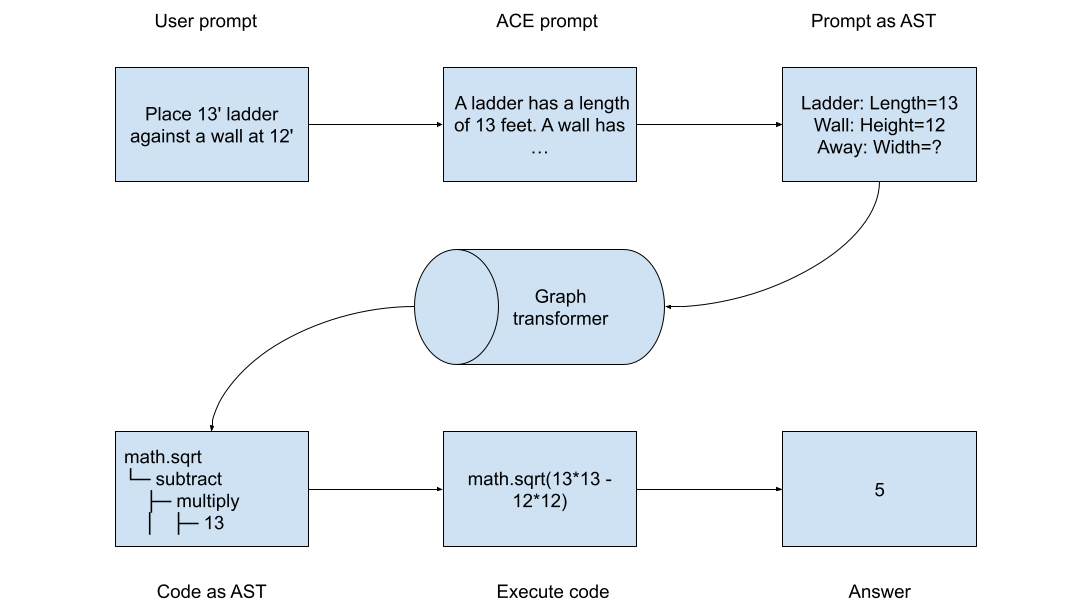
Advantages:

  • No token fragmentation: "ladlen" remains a single node, not ["lad", "len"]
  • Structure preserved: Tree hierarchies maintained as explicit parent-child edges
  • Predict nodes, not tokens: Generate the next node in the tree structure

The graph transformer learns to map problem structures to solution structures while preserving hierarchical relationships.

Expected Benefits

1. Accuracy Improvement

For mathematical reasoning (FrontierMath):

  • Pure reasoning mode: 13.5%
  • Current code generation: 26.3%
  • Lossless generation: 35% - 40% [3]

For business logic (billing, inventory):

The output graph should resemble object-oriented structures rather than functional math. For example, a billing system would generate: Order <contains> OrderItems with Order.calculate() method to compute total from line items. Success metric: compare graph-based accuracy against token-based generation for business datasets like CSV, JSON and RDBMS where relationships between entities matter.

For relational reasoning ( reversal curse ):

Current models fail at symmetric reasoning. GPT-4 answers "Who is Tom Cruise's mother?" correctly 79% of the time, but only 33% for "Who is Mary Lee Pfeiffer's son?" Graph-based representations should improve the reverse direction to >50% by making relationships bidirectional by default.

2. Interpretability as a side benefit

Code generation provides built-in interpretability. Since code execution is deterministic and 100% accurate, we can:

  • Inspect the generated code directly
  • Ask the LLM to explain the logic in plain English
  • Use the code as an intermediate reasoning step

This makes the model's reasoning process transparent and verifiable. It's a significant advantage over opaque LLM reasoning.

3. Cost Reduction: 4-10x savings

Deterministic code execution is orders of magnitude more efficient than probabilistic token generation. So, for simple math, tool-based code generation is already 4-10x cheaper than pure reasoning [2]. However, current systems still use probabilistic (lossy) code generation. With lossless code generation via graph transformers, we should expect even greater improvement.

Implementation

Challenges

1. Prompt rewriting from English to ACE english

LLMs already rewrite vague or ambiguous prompts entered by user into effective prompts. This is why they can “understand” poorly phrased instructions or fix user errors on the fly. But this is fuzzy but forgiving. They tolerate typos, slang, mixed grammar, and context drift. ACE parsing is strict. A missing determiner or ambiguous clause can cause parsing failure. Users might have to fix ambiguity before reasoning can proceed.

Controlled languages like ACE are good for facts, relations, and logic. But they struggle with tone, irony, or indirect intent (“Can you maybe check this quickly?”). It would flatten them away or need extra metadata to preserve them.

2. Graph transformer trained on ACE as input and AST as output

This is the biggest challenge of all. There are several challenges such as:

Graph Structure Complexity

Variable graph sizes: Unlike fixed-sequence transformers, input graphs (ACE representations) and output graphs (ASTs) have highly variable sizes and topologies. The model must handle graphs ranging from simple expressions to complex nested structures.Predicting the next node in a partially-constructed AST is fundamentally different from predicting the next token. The attention mechanism must learn which edge types are relevant for different reasoning steps.

Training Data Scarcity

No large-scale ACE-to-code dataset exists: You'd need millions of examples of:

  • Natural English prompts
  • Their ACE translations
  • Corresponding code solutions
  • All three aligned and verified for correctness

Current datasets are sequence-based: Existing code generation datasets (like HumanEval, MBPP, CodeContests) provide text→code pairs, not structured graph representations. You could generate ACE→code pairs synthetically, using the prompt rewriting mentioned above. The manual verification will cost still be high.

Computational Challenges

Graph attention is expensive: Standard transformer attention is O(n²) for sequence length n. Graph attention over arbitrary topologies can be even worse, especially with heterogeneous edge types.

Message passing iterations: Graph transformers typically require multiple rounds of message passing to propagate information across distant nodes. This increases computational cost.

3. Supporting conversations with reasoning

Real worlds conversations are not an either/or choice between casual conversation and reasoning. They are combined together. For simple conversations that doesn't require reasoning, it can switch to regular model in mixture of experts (MoE) architecture. But, there will be conversations with relational reasoning like the Tom Cruise example we saw earlier. These graph transformers have to be trained on ACE as input to produce ACE as output and then ACE output has to be converted back into natural english, so that the conversation looks natural. This also involves significant amount of effort in training.

Why Now?

Graph-based approaches aren't new. GraphCodeBERT incorporated data flow graphs but still processes tokenized sequences. They use graph structure only to guide attention. We're proposing native graph architectures that operate directly on AST and ACE structures, predicting next nodes rather than next tokens. So far, t he barriers have been:

  • Scaling seemed to work – more compute kept improving sequence models
  • Natural language parsing was unreliable – ACE provides a solution
  • The field optimized for fluency over precision – creative writing doesn't need perfect structure

Now that code generation accuracy has plateaued in practical use (not theoretical benchmarks), structured graph provides a promising path for improvement. But does the potential improvement justify the engineering investment? Yes, if you consider that the nature of intelligence is meta:

  • Understanding data from what you read and recalling them is memorization. This is what GPT3 does.
  • Understanding metadata such as pythagorean theorem and applying it to data such as ladder problem is reasoning. This is what GPT5 does.
  • Understanding meta-metadata such as ANTLR grammar and creating a new programming language is invention. That's what AGI should do.

So, the linear tokenization that worked for memorization, may not be best path forward. Structured graphs, instead, might be the right path for reasoning and AGI.

Conclusion: A Return to Deterministic Foundations

Our approach is deliberately narrow: an antithesis to scaling laws and general intelligence. Rather than throwing more compute at the entire problem, we focus on making compute efficient for a specific bottleneck in the reasoning chain:

AGI > Reasoning > Tool Use Mode > [Code Generation]

It's "do things that don't scale, but for AGI." By focusing on code generation, a tiny but critical part of the pipeline, we can address two fundamental sources of loss:

  • Tokenization fragmentation - "strawberry" becomes ["straw", "berry"], forcing reconstruction from pieces
  • Treating hierarchical structures as linear sequ
Read More
Sun Aug 02 2026
The Hidden Tax Penalty Killing Bootstrapped Startups

The Hidden Tax Penalty Killing Bootstrapped Startups

Three years ago, when we started making profit as a bootstrapped startup, I was stunned by how little money I could reinvest in my own company compared to a funded competitor. We paid ourselves 20% of the profit and paid 40% in taxes and reinvested the rest i.e. 40% into our business. Meanwhile, a VC-backed competitor could show losses and invest 100% of the revenue plus the $10 million or $50 million they raised from investors. In this essay, I'll show you how screwed up the incentives are for bootstrapped companies and what we can do to fix this.
Real numbers from my startup

Let me show you the actual financials from my company, so you can see exactly how this works.

Our 2023 performance:

  • Revenue: $730k
  • Operating Expenses: $260k
  • Net Profit: $470k
  • Taxes paid: $180k
  • What we took home: $70k ($35k for each founder)
  • Reinvest in business: $220k

We paid ~3x more in taxes ($180k) than we paid ourselves ($70k total) and we used the $220k to hire our first engineer and try adwords.

Compare it to a VC-Backed competitor:

  • Raises $10 million in funding
  • Revenue: $730k
  • Reports $0 profit (reinvests everything)
  • Pays $0 in taxes
  • Reinvest in business: $730k + $10 million

In other words, my startup has to hire our first engineer with half of our revenue, while a funded startup can use its full revenue along with the $10 million they raise from investors. They could easily hire 10 engineers and outspend us in marketing. A large company like Amazon could simply not generate any profits for several years and reinvest all their untaxed money into making a product and selling them at a loss. A small business owner who has to pay themselves through profit can never compete with them. That's how monopolies are built today.

This Isn't Just Me

Nithin Kamath calculated India's tax rates: 52% on dividends vs 15% on capital gains. Companies burning cash get valued at 10-15x revenue. Profitable ones get 3-5x. His conclusion: "If you're competing against someone burning cash, you almost have to match it to defend market share."

Deepak Shenoy did the math: burning ₹100 crore is 9x more valuable than making ₹100 crore profit. Pure tax arbitrage.

Jason Lemkin described the trap: You make $2m-$20m in profit. Do you distribute it, save it (and pay taxes on money you're not spending), or split the difference? Meanwhile "your venture-backed competitors are investing all of it, not just some."

How the System Favors VC-Backed Founders

  • Long-Term Capital Gains vs. Income Tax

    VC-backed founders don't take profits. They hold stock that gets taxed at 20% (long-term capital gains) when they sell. Bootstrapped founders who take profits as income, are taxed at 40%+ (corporate + personal).

  • QSBS: The $10M Tax-Free Exit

    Venture-backed startups structured as C-Corps qualify for QSBS (Qualified Small Business Stock). They can sell the first $10M of shares tax-free after five years. Bootstrapped founders usually run LLCs or S-Corps. We don't qualify. We pay full capital gains tax on exit.

  • Holding Companies & Tax Deferral

    Big companies move profits into holding companies to defer taxes and keep reinvesting. Bootstrapped founders don't have these tools. We get taxed immediately on earnings. Less money to scale.

What Would Fix This

Governments could introduce tax incentives for bootstrapped founders, similar to QSBS. Here's what that could look like:

  • Tax only the founder distribution: Founders shouldn't have to pay taxes for the profits that go back into reinvestment of the company.
  • Bootstrapped Founder Exit Exemption: A tax break like QSBS, but for founders who grew without VC money.
  • Lower corporate tax for profitable startups: Reduce rates for high-growth companies that fund themselves.

This would let bootstrapped startups compete without being forced to raise money just to play the tax game.

The Geographic Opportunity

Ireland and Luxembourg built entire economies as tax havens for big corporations. They could do the same thing for bootstrapped founders instead. These countries could:

  • Attract profitable, sustainable startups
  • Offer tax deferral on reinvested profits
  • Give preferential treatment to companies that grow organically
  • Build an alternative to Silicon Valley's burn-cash model

Europe and other regions could support the next generation of profitable businesses instead of trying to copy silicon valley.

Why This Matters Now

AI tools are making it cheaper to build software. Smaller teams can launch products that used to require millions in funding. More founders will be able to build profitable businesses without raising money. But the tax system hasn't caught up. It still treats profit as something to penalize, not something to reinvest. Countries could change this. Instead of copying Silicon Valley's VC model, they could offer better tax treatment for founders who reinvest profits. Make it easier to grow without external funding.

Conclusion

Paying 3x more in taxes than what we took home as income was a shock to me at first. I am sure, many other bootstrapped founders are shocked at first that the system only rewards burning cash and staying unprofitable. So, they either chose to play the same game (raising money and show zero profit) or move to tax havens.

For policymakers: You have a choice. You can create tax incentives for bootstrapped founders and companies that build sustainably without requiring bailouts or creating market bubbles. Or you can watch these founders incorporate elsewhere.

For bootstrapped founders: If policymakers don't act, we can build this ourselves. Think Stripe Atlas for bootstrapped companies, a service that incorporates you in countries with favorable tax treatment for reinvestment, where you only pay taxes on founder distributions, not on profits you reinvest.

Countries like Estonia, Ireland, and Singapore are already competing for remote companies. The first country to offer real tax advantages for bootstrapped founders will attract the next generation of profitable, sustainable businesses. We don't need permission to build profitable companies. But we shouldn't have to move countries just to reinvest in them.

Read More
Sun Aug 02 2026
Is Your Startup Failure Your War or Shame?

Is Your Startup Failure Your War or Shame?

My co-founder and I had just moved to France and everything fell apart. Our recommendation engine for ecommerce had signed up fast-growing startups across India and Southeast Asia. Most of them were funded by Rocket Internet. We thought moving to Europe would help us land more of their portfolio companies. We even signed POCs with Galeries Lafayette and Veepee.

Then GDPR hit. Overnight, handling customer data became too risky, and every European client pulled out. Meanwhile, the ecommerce bubble burst in Asia. Each month brought news of another customer sold to Alibaba, their IT infrastructure migrating to Alibaba Cloud. The final blow was a customer refusing to pay during an Alibaba acquisition. We couldn't cover our GCP bill.

Winning hackathon to stay alive

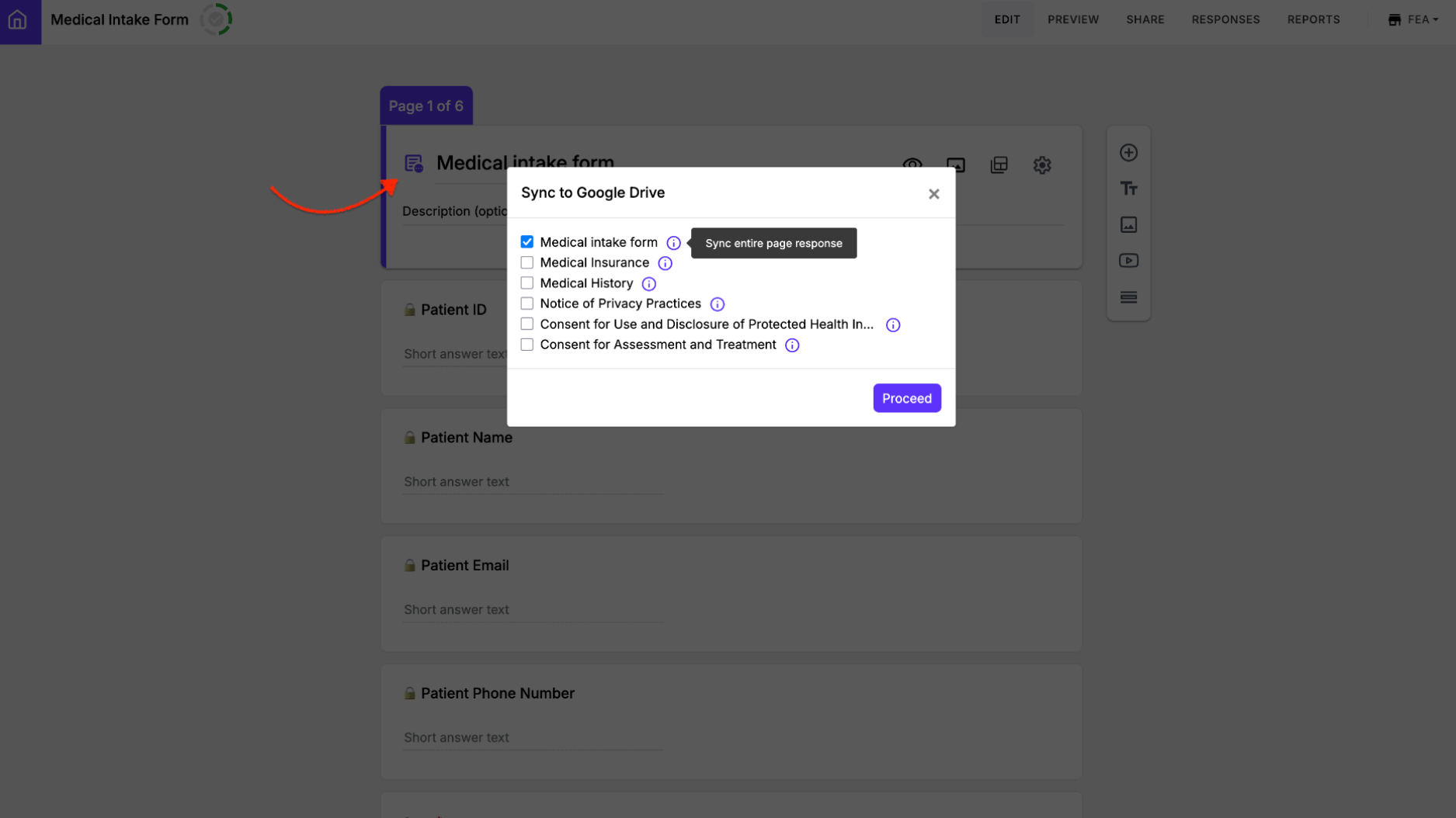
We survived on hackathon prizes while attempting pivots. But, nothing worked. We couldn't even afford a form builder to collect leads, so I embedded a Google Form on our homepage. It looked terrible. I wondered if I could reskin Google Forms to match our site. I built it as an addon over a weekend, and launched it for free on Google Workspace Marketplace.

The pivots kept failing, but the addon kept growing to hundreds of thousands of installs. Eventually I told my co-founder: maybe we should charge for this thing we built by accident. That's how Formfacade started.

But this isn't another redemption arc where I ventured into the unknown, struggled, then won. You know, this is not how real life works. The truth is: failure is constant at every stage of building a company. It just has different names.

Once We Succeed, We Call It War

When Elon Musk says "running a startup is like chewing glass and staring into the abyss," it becomes a legendary war story. That's because he's telling it from the other side. He's crossed the life and death stage of his startup. Failure still hurts (competitors, rejections, public criticism) but it doesn't threaten his livelihood. He can talk about it publicly, because he's not threatened by others judging him.

When We're Going Through It, We Know It as Struggle

When you haven't succeeded yet, you have too much self-doubt to speak about it. After we had some traction with Formfacade, we applied to YC and got shortlisted for an interview. One week before, my doctor told me I had a severe valve leak in my heart and needed open-heart surgery immediately. The estimated recovery period was two months: one month for preparation and another for recovery. That was almost the entire duration of the YC program. Even worse, we were a two-person team and I was the only developer. I didn't know who would fix bugs during my hospitalization.

Years later, I wrote about that story , because I had successfully crossed the literal life and death experience for myself and my startup. But if I had failed on one of those, I wouldn’t be here to tell the tale. That's the difference between a war story and struggle.

When We Let Down the Ones We Care About, We Hide Our Shame

Unfortunately, it can get even worse than that. The most painful part isn't when it affects you. It's when it affects your child or wife or parents. When you're failing, startup life isn't very different from poverty. You're worth millions on paper, while struggling to meet basic needs. Your parents lose confidence and subtly mention job openings. You can't buy a gift for your son's birthday and you cry alone in a parking lot thinking about it. Those are the moments that break you.

That's when you understand what shame means. What you need at that point isn't a startup mentor. It's a therapist. But it's unprofessional to talk about this in founder circles and you can't afford therapy anyway.

If You Have to Quit

For those of you who are too embarrassed to even talk about it: Your situation might be unique, but the shame isn't. There is nothing to be ashamed of, even if you have to quit. Personal life isn't a distraction from your startup. It is the point. There's no victory in building something while your relationships crumble. There's no trophy for missing your child's birthday because you couldn't afford to "lose focus."

If you quit, you haven't failed at courage. You've already proven that by coming this far. You can come back stronger. When my doctor told me about my surgery, I asked him about my survival rate. He told me it was above 95%. I told myself that's far higher than my startup's survival rate of 5%. While that is a bleak survival rate for startups, you can try again if you fail. Failure is a blip in your startup, but its consequences in life are real. So, take care of your mental and physical health as you go through this inevitable pain. Because, t he real failure isn't shutting down a startup. It's shutting yourself down.

(This is a transcript of my talk for Failure circle at Google Accelerator)

Read More
Sun Aug 02 2026
Let AI Speak in Its Mother Tongue

Let AI Speak in Its Mother Tongue

Two years ago, Mark Zuckerberg revealed that teaching Meta's Llama model with code significantly improved its reasoning ability. It enabled smaller models like Llama 3 to outperform larger models like Llama 2. The industry took notice and every leading AI lab began teaching models to code. This essay explores why learning code helps models reason.

In the second part, we'll explore how models went from learning code to generating code as a reasoning tool. While doing so, they continue using the transformer architecture built for natural language leading to accuracy loss.

In the third part, I propose graph transformers for code generation. Current transformers excel at word sequences but struggle with code's hierarchical structure (packages containing classes containing functions containing expressions and datastructures). Graphs naturally represent this hierarchy.

Why Teaching Code Improves Reasoning in AI

Consider a simple problem of placing a 13-foot ladder to reach exactly 12 feet up a wall:

Users work with data: A maintenance worker will climb the ladder with measuring tape, mark 12 feet on the wall, then drags the ladder until it hits the mark. This approach works directly with physical data i.e. measuring, positioning, adjusting. It's concrete, reliable, but inefficient.

Engineers work with metadata: An engineer will apply the Pythagorean theorem: √(13² - 12²) = 5 feet. They will place the ladder base 5 feet from the wall, and it will reach exactly 12 feet. The engineer works with abstract relationships such as variables, equations, formulas that generalize across all similar problems. One calculation replaces countless physical measurements.

This is why users use spreadsheets for repetitive tasks. Spreadsheets provide an intuitive way to work with data while writing formulas that can be applied to consecutive rows. You see the results immediately as you work.

Software engineers, on the other hand, think with algebra (i.e., as metadata). They declare variables (ladderLength, reachHeight), apply operations, and assign the result to distance_from_wall. They express this logic in an IDE without seeing any data. Only at runtime do they apply actual values and check if their logic works correctly.

This ability to abstract logic from data is what separates software engineers from users. It's also what distinguishes models trained primarily on text (like early GPT-3) from those trained heavily on code (like GPT-5). This is why Llama 3, trained on code, outperformed the larger Llama 2 in reasoning. It learned to operate at the metadata level by thinking in terms of variables and functions rather than concrete values. Training on code isn't about learning syntax; it's about learning to abstract. When trained on Python code, the model's hidden states learn to represent code structure as variables, types, control flow rather than just word patterns.

Reasoning is the ability to climb this abstraction ladder: from manipulating concrete data to manipulating the code that generates the data. This abstraction jump created a wave of AI coding tools like Cursor, Replit. But then progress stalled. Instead of improving code understanding, models started outsourcing to external Python interpreters.

Tool use masks architectural limitation

When you ask GPT-5 to count the number of letters in this essay, it generates python code and executes it in a sandbox to find the answer ( see code + results ). On the surface, it looks like GPT5 performs better than GPT4, but if you force it to use pure reasoning mode, it falls flat:

This was quite visible in GPT5’s FrontierMath performance during its launch announcement :

  • Tool-use mode: 26.3% accuracy
  • Pure reasoning mode: 13.5% accuracy

The 2x improvement shows GPT-5 learned when to delegate. It is a clever engineering solution. But it hides the problem in AI research: code generation hasn't improved much. The model got better at recognizing when to call Python, not at understanding code structure. This is why vibe coding tools that were hoping for a dramatic improvement in code generation were disappointed.

There are two fundamental issues that cause this plateau:

  • Tokenization Fragmentation

Ask GPT3 to count the letter "r" in "strawberry," and it often fails. Not because it can't count, but because tokenization splits the word into ["straw", "berry"] or ["str", "aw", "berry"]. A variable named ladderLength gets split into ["lad", "der", "Length"], forcing the model to reconstruct meaning from fragments it never sees as whole. Modern tokenizers mitigate this, but the broader architectural issue remains, as we see in counting the letters in this essay.

  • Structure Flattening

Code is hierarchical: functions contain blocks, blocks contain statements, statements contain expressions and datastructures. Current transformers linearize this into flat token sequences:

Your python code:

math.sqrt(ladderLength*ladderLength - reachHeight*reachHeight)

Becomes:

["math", ".", "sqrt", "(", "ladder", "Length", "*", "ladder", "Length", "-", "reach", "Height", "*", "reach", "Height", ")"]

The tree structure has to be inferred from token proximity rather than explicit relationships. The model must reconstruct hierarchical relationships as hidden states, often called the Neuralese .

Graph Transformer: Mind Map for AI

Unlike natural language, code is compiled into a parse tree (AST) that can be executed by an interpreter. Graph transformers are a natural fit for this structured representation. But code is the intermediate step for reasoning tasks. Users type in English and expect conversational responses. How do we bridge this gap?

The answer: a three-part pipeline that preserves structure throughout.

Part 1: Parse User Prompts into Structured Graphs

User prompt is in natural language such as english which is ambiguous and might have spelling/grammatical mistakes. LLMs rewrite this into proper prompts to be effective. Instead of rewriting into english, we can rewrite them into Attempto Controlled English (ACE), a precisely defined subset of English with deterministic grammar. Think of it as TypeScript for natural language. Just as TypeScript adds type safety to JavaScript, ACE adds structural precision to natural language. Every sentence has exactly one structural interpretation.

Our ambiguous English prompt:

Place a 13 foot ladder against a wall at 12 feet

Becomes unambiguous ACE :

A ladder has a length of 13 feet. A wall has a height of 12 feet. Calculate the distance from the wall where the ladder base must be placed such that the ladder top reaches the wall height.

This can be parsed into graphs where nouns like ladder, length become nodes and verbs like has, calculate become edges.

Part 2: Parse Code as Abstract Syntax Trees

Instead of treating code as a linear token sequence, we parse it into an AST that preserves hierarchical structure:

Our Python code:

math.sqrt(ladderLength*ladderLength - reachHeight*reachHeight)

Becomes parse tree :

math.sqrt

└─ subtract

├─ multiply

│ ├─ ladderLength

│ └─ ladderLength

└─ multiply

├─ reachHeight

└─ reachHeight

We can now train the graph transformer with ACE prompt as the input graph and python parse tree as the output graph.

Part 3: Convert ACE prompt into code during inference

During inference, instead of predicting tokens sequentially, graph transformers predict nodes structurally. The model asks "what operation does sqrt take as input?" not "what word comes after 'sqrt'?" This reduces the accuracy loss that happens when rebuilding structure as hidden states. Parse tree makes the structure explicit and avoids loss:

  • No tokenization fragmentation: ladderLength stays whole
  • Structure preserved: Parent-child relationships explicit
  • Type-aware generation: Model knows what kind of node can go where

Why This Solves the Accuracy Problem

Remember the FrontierMath results:

  • GPT-5 with external Python: 26.3% accuracy
  • GPT-5 pure reasoning: 13.5% accuracy

The 2x gap exists because Python execution is deterministic (100% accurate) while GPT-5's code generation is lossy (fragments variables, flattens structure). It reconstructed variables and hierarchical relationships implicitly as hidden states i.e. in neuralese. But that's wasted potential. We trained the most sophisticated pattern-recognition system ever built, then made it spend half its compute reconstructing parse trees, which compilers can do at zero cost. Graph transformers let neuralese do what neuralese is for i.e. understanding the meaning of the user prompt and providing solution as code, not recovering structure of the code.

Interpretability comes as a side effect of structured graph. Parse tree of the generated python code will follow python grammar instead of a hotchpotch grammar cooked up inside neuralese. If the chain of thought is generated as graph, it will mimic how humans think with mind maps.

Implementation Challenges

This architecture requires solving two key problems.

Graph Attention Scaling

Graph transformers aren't new. They're so computationally expensive that they are not practical for LLMs. But LLMs moved from generating natural language for chatbots to code generation for reasoning. So, this investment may now be worthwhile.

We can also use a fallback to see if graph produces better results in the current transformers. We can train them with parse tree with modified attention bias. For example, we can increase attention bias for parent/child/sibling nodes and reduce it for distant nodes. If this works, we can then invest in graph transformers for even better results.

ACE Translation

Converting natural English to ACE with high accuracy is a big challenge. It is a 20+ year old project used mainly in academic circles, and lacks a large public corpus for training. Other structured representations like AMR (Abstract Meaning Representation) have more active research communities but face similar data constraints. However, LLMs already do prompt rewriting to improve clarity. Redirecting this effort toward ACE-based (or AMR-based) prompt rewriting could offset the additional labeling cost.

If the initial cost of this migration is high, we can use flat tokens as input while outputting graphs with modified attention as an incremental step toward full graph transformers. Some research explored this in the pre-LLM era, and revisiting it in the reasoning model era could provide the incremental validation needed to justify investment in ACE based prompt rewriting.

Beyond Metadata: The Path to AGI

When DeepMind researchers trained AlphaGo on data from Go games, it became good at Go, but its progress stalled. So, they trained a new model called AlphaZero on all games. It not only became better at Go, it also automatically became better at Chess without training. This is again because of the meta understanding of the game rules. Now they are exploring if the next version of AlphaZero can invent a new game.

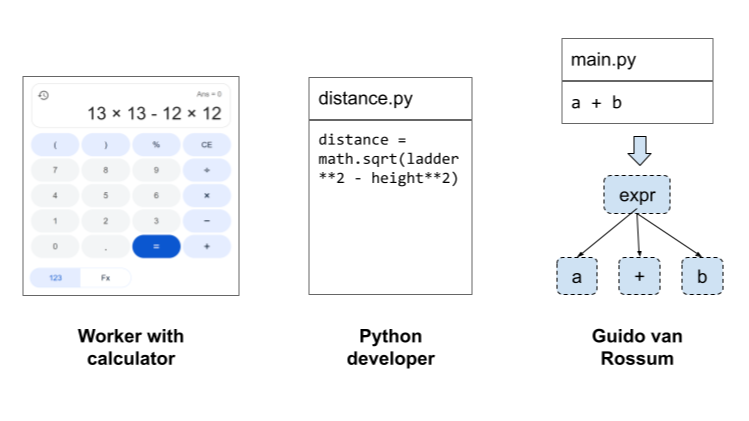
This is similar to how we move up the value chain from user to developer to language creator. As users, we use calculators (data tools) to solve specific problems like finding ladder distance. When we learn to code, we abstract these tasks into code (metadata), using programming languages like python. Once we are very good at coding, we dream about creating new language like python using parser generators like PEG (meta-metadata).

If this analogy holds for AI, will giving them PEG grammar of python and javascript help them create a new language? Will it know which parts of a language are good and combine them to create a new language e.g. readability of python and flexibility of javascript? Or will they never understand developer taste?

If we revise OpenAI’s levels framework using our meta framework, we get:

  • Level Math Coding Games AI
  • Data Worker measuring with tape User using your app AlphaGo training on Go games LLM answering questions
  • (Level 1 - chatbot)
  • Metadata Engineer using pythoream theorem You coding that app in python AlphaZero playing all games Reasoning model writing code
  • (Level 2 - reasoner)
  • Meta-metadata Pythagorus discovering the theorem Guido creating python with PEG Next AlphaZero creating a new game AGI discovering theorem, language, game
  • (Level 4 - innovator)
  • Specialized for math Specialized for coding Specialized for games Generalized across disciplines

Before LLMs, we doubted if AI could ever create art or poetry that understands human taste. Yet here we are. Perhaps the same will happen for programming languages and theorems. After all, intelligence isn't just about solving problems. It's about discovering the hidden rules that create them. Maybe, it will find the hidden rules across meta-metadata like pythagoren theorem, python, Go that we haven't discovered yet. And that might be the path to AGI.

Note:

This is a summary of my essays over the last 2 years. Here are the relevant ones:

  • The Nature of Intelligence is Meta
  • Being a Developer in the Age of Reasoning AI
  • Reasoning Is Not Model Improvement
  • From Lossy to Lossless Reasoning

For more details, please read them.

Read More
Sun Aug 02 2026
AI that makes life or death decisions should be interpretable

AI that makes life or death decisions should be interpretable AI that makes life or death decisions should be interpretable

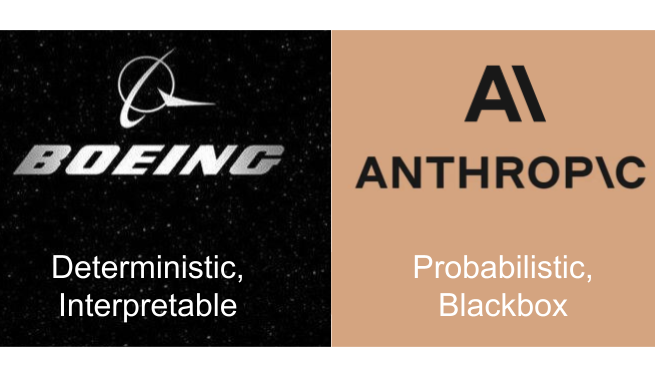
Last year, Boeing 787 crashed into a medical college in India killing 260 people. Investigators blame the pilots. The pilots' families blame Boeing and the final report has not been released. Meanwhile, US Department of War wants to use Anthropic’s AI model in fully autonomous weapons without human approval. Anthropic refused it, because their model is unreliable.

AI systems of today are nowhere near reliable enough to make fully autonomous weapons. Anyone who's worked with AI models understands that there's a basic unpredictability to them that in a purely technical way we have not solved.

— Dario Amodei, Anthropic CEO

The unreliability of AI models arises out of two problems:

AI is lossy: AI model breaks the input prompt into tokens (roughly equivalent to words). Then, its transformers reconstruct structure from fragments and loses accuracy in the process [1]. Due to this, the models can count characters incorrectly or generate wrong code. Now, they might kill innocent people in a small % of cases.

AI is a blackbox: When the model converts the broken-down tokens into an array of numbers (an embedding vector), we don't know what each of these numbers mean. Neither do we know how each of these numbers transforms into a different array of numbers as it goes through the layers of the neural network.

I have long argued that we have to reduce the loss in accuracy as much as possible. In this essay, we will see why solving the black box nature is equally important when it comes to life or death decisions like fully autonomous weapons or cancer detection.

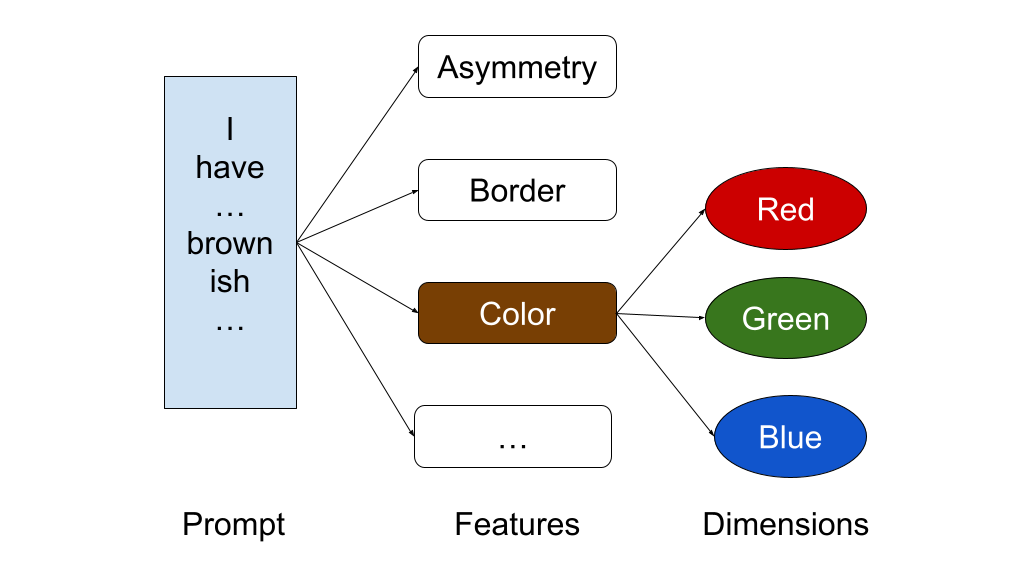
Let's consider this prompt you might give an AI:

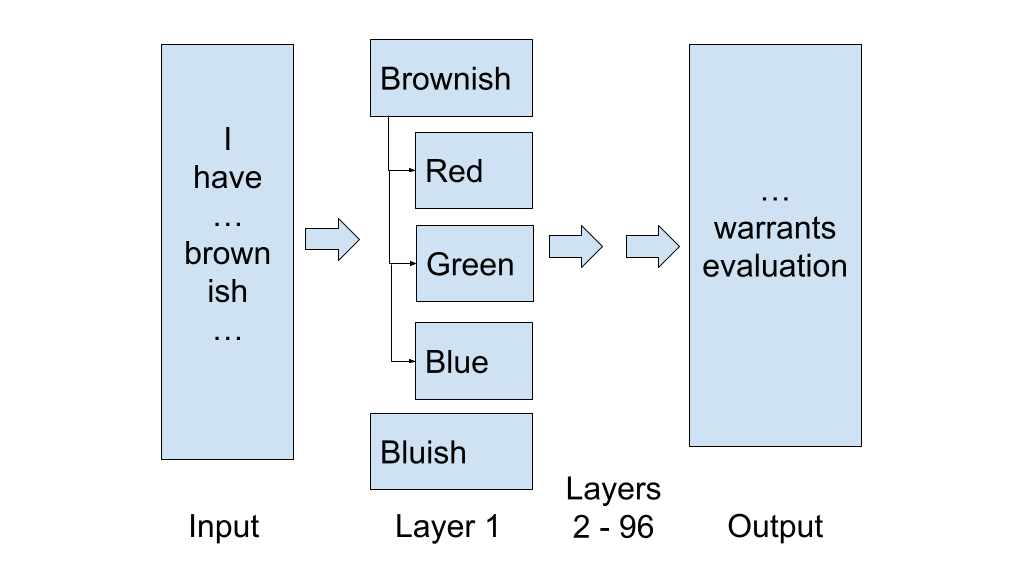
I have a mole on my upper chest. It's been there for years but it looks darker recently, with some brownish patches and a bluish spot on one side. Should I be worried?

An AI model might analyze this and output:

The color variation you describe, particularly the bluish area and uneven brown tones, warrants dermatological evaluation.

How did the model get there? What happened between "brownish patches" and "bluish spot" and the assessment that these colors could be an indication of cancer?

Understanding the Black Box

The model splits your prompt into tokens and converts each one into a vector of 4,096 floating-point numbers:

Tokens

Embedding vector

I

[0.23, -0.45, 0.56, …]

have

[0.43, -0.76, 0.12, …]

brown

[0.52, -0.31, 0.43, …]

ish

[0.11, 0.45, -0.08, …]

What does 0.52 in the first position of "brown" mean? Nobody knows. Not the engineers who built the model. Not the researchers who trained it. Every single dimension is unnamed.

These vectors are stacked into a matrix, roughly 50 × 4,096, about 200,000 unnamed numbers. This passes through ~96 transformer layers. Early layers learn syntax. Middle layers learn that "brownish" describes the mole color and that "one side" indicates asymmetry. Late layers combine color variation, asymmetry, and change over time into a risk assessment. Out comes the recommendation.

Dermatologists use the ABCDE rule: Asymmetry, Border, Color, Diameter, Evolving. Multiple colors within a single lesion is one of the strongest indicators of cancer. The model almost certainly learned this. But which of the 4,096 dimensions encodes "color variance within a lesion"? Nobody can say. The path from "brownish patches and a bluish spot" to "warrants evaluation" is invisible. For color identification that can be life or death, invisible is not good enough.

Anthropic can find brown color as feature

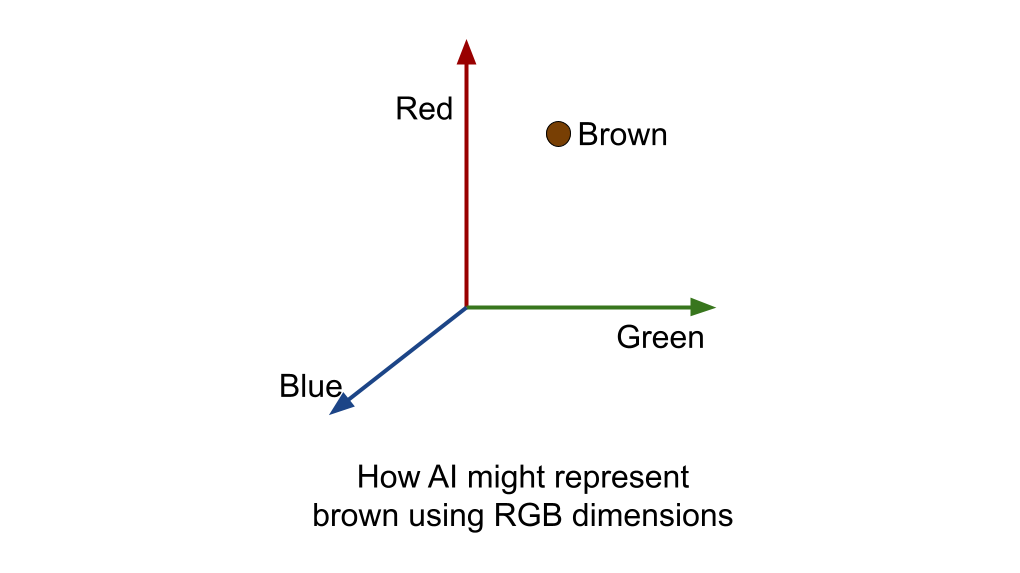
In May 2024, Anthropic published Scaling Monosemanticity . Using sparse autoencoders, they decomposed the internal activations of Claude 3 Sonnet into interpretable features. They found millions of recognizable patterns such as Golden Gate Bridge, code bugs, sycophantic praise etc. In our prompt, they can find “brown” as a feature. These features are a combination of dimensions. Hypothetically, these dimensions could be Red, Green, Blue. It could represent every color in the world as coordinates in 3 dimensional RGB axis. Brownish could be (165, 120, 60), bluish could be (40, 50, 120) and so on.

But, they did not find the dimensions i.e. the underlying axes such as Red, Green, and Blue. And they did it backwards. They trained unnamed dimensions first and let millions of features get packed into them via superposition. If the model was trained on colors based on CMYK, then its unnamed dimensions could represent CMYK instead of RGB. So, these dimension is Sonnet are still a mystery. But, w hat if we named the dimensions first?

Converting brown color into RGB

Two years before Anthropic's paper, researchers had already proved this was possible. In 2020, Şenel and colleagues at Koç University published a method that constrains embedding training so each dimension aligns with a named concept. During training, words associated with a concept are pushed to high values on that dimension. They found that naming the dimensions didn't hurt performance. The embeddings remained just as useful while becoming interpretable.

In 2022, the same group extended this with BiImp (bidirectional imparting). Each dimension encodes "abstract" in the positive direction and "concrete" in the negative direction. But, they didn't push naming down to the primitive level such as Red, Green and Blue.

RGB for every feature in the world

Both represent significant progress, but neither of them paint the full picture for interpretability:

  • Anthropic found features but from unnamed dimensions.
  • BiImp named dimensions but didn’t trace them to features.

The solution is to combine both: name the truly canonical and orthogonal dimensions, then let features emerge on top. Such dimensions already exist in the scientific literature. Color has 3 (Red, Green, Blue) from vision science. Taste has 5 (sweet, sour, salty, bitter, umami) from gustatory science. Emotion has 3 (valence, arousal, dominance) from psychology. Spatial dimensions from geometry. Sound from acoustics and so on [2]. This is a significant undertaking, but w ith such named dimensions, the diagnosis becomes fully traceable:

Now, if we run Anthropic's feature extraction on top, it might be readable by the construction of named dimensions. A doctor can see how the brownish color and asymmetric distribution are used in the AI's decision making process.

Graph transformer to convert graph embedding

Named dimensions will change the shape of the current embedding vector. The current flat array of 4,096 unnamed floats is a point in dense space. But, the new named dimensions is a sparse graph: each token is a node, each named dimension is a typed edge.

Brownish

Representation

Current

[0.52, -0.31, 0.43, ..., 0.19]

flat array

Proposed

{

red: 0.65,

green: 0.47,

blue: 0.24

}

sparse graph

This graph embedding is the natural input for a graph transformer, where attention operates on typed edges between named nodes instead of matrix multiplications over floating point numbers.

We can now trace the prompt into words, words into graphs of features/dimensions and see how each layer of the neural network transforms them into intermediate graphs till it reaches the answer. Incidentally, this graph transformer architecture can be used for improving accuracy . Both, interpretability and the losslessness are the two sides of the same architecture. Together, a graph embedding feeding a graph transformer, where every step from input to output is traceable.

Aftermath of a probabilistic error

Today, we don't have this traceability. So, Anthropic wants a human to be involved in the decision before the trigger is pulled. US Department of War, on the other hand, says someone will be accountable after the fact. With human approval, you can catch the model's error before acting. Without it, the person overseeing can blame the model. The model can show its chain of thought, but those are posthoc justification and reasoning models don't always say what they think :

Model sometimes generate unfaithful chain of thought that contradicts their internal knowledge. When you give incorrect hints, they often construct elaborate yet flawed justifications.

When given a hidden hint, Claude 3.7 Sonnet uses it to get the answer but only admits it 25% of the time. The other 75%, they make up a fake explanation.

Models hide unethical behavior and actively conceal that they used stolen information while presenting clean looking reasoning.

Boeing builds aircraft with deterministic, traceable engineering. Every bolt has a specification. Every system has a flight data recorder. The technology is fully interpretable. And still, the final report is not yet released. Now imagine Anthropic's AI model making targeting decisions in fully autonomous weapons. If it’s wrong 1% of the time and it kills an innocent person, we at least owe an explanation and assure that the mistake won’t be repeated. Can we do that with LLM that is probabilistic, not deterministic?

Anthropic was right to draw the line today. But drawing the line is not enough. The model has to be interpretable in the days to come. The mole on your chest deserves that. So does the person on the other end of a drone strike.

Notes:

The lossless argument is in Let AI Speak in Its Mother Tongue essay. The interpretability argument is in this essay. Both feed into the same architecture: graph embeddings for a graph transformer, where every step from input to output is traceable and no information is lost.

Anna Wierzbicka's Natural Semantic Metalanguage identifies ~65 semantic primes found in every documented human language: SOMEONE, SOMETHING, GOOD, BAD, BIG, SMALL, THINK, WANT, DO, HAPPEN, BEFORE, AFTER, BECAUSE, IF. They appear in every language ever studied, from Mandarin to Yankunytjatjara.

Read More
Sun Aug 02 2026
New feature: Granular permissions for forms and reports

New feature: Granular permissions for forms and reports

We've introduced a powerful new feature that gives you greater control when collaborating with your team. You can now set up access controls to grant editor access to forms, allow team members to view, edit, and manage responses, and share specific reports with tailored permissions.

Share form with collaborators

You can share forms with your team by assigning appropriate access levels to each collaborator. Collaborators can be added with either Editor or Viewer permissions:

  • Editor: Has full access—can edit the form, view and manage responses, and create, edit, and share reports.
  • Viewer: Can view and manage responses, and create, edit, and share reports, but cannot make changes to the form itself.

Login to Formfacade / Neartail / Formesign > click Forms to view the list of your forms > click on the form you would like to share > Edit page will be displayed > click Share > In the Share page, click Add collaborators > Collaborators page will be displayed > click Add collaborators > In the Share popup, enter the email address, select Editor or Viewer permissions, add an optional message and click Share.

Share specific reports with collaborators

When you share a form with a collaborator, they will be able to view, edit, and manage responses. If you need to limit their ability to edit responses or restrict access to the full dataset, you can create specific reports and share only those with them.

Granular permissions also extend to individual reports. You can assign collaborators either Editor or Viewer permissions:

  • Editor : Can hide or remove columns, apply conditional formatting, set filters visible to everyone, switch reporting periods (Weekly, Monthly, or Yearly), export data as CSV, and add other collaborators to the report.
  • Viewer : Can apply filters for their personal use only (these filters are not visible to other collaborators).

Login to Formfacade / Neartail / Formesign > click Forms to view the list of your forms > click on the form to open it > Edit page will be displayed > click Reports > In the Reports page, click on the report you would like to share > click on the ⫶ more icon > click Add collaborators > In the Share popup, enter the email address, select Editor or Viewer permissions, add an optional message and click Done.

This feature update gives you more control over collaboration by allowing you to set granular permissions for forms and reports. You can now tailor access for each team member, ensuring a more secure and efficient workflow. Give it a try and share your feedback with us!

Read More
Sun Aug 02 2026
Forms Must Die

Forms Must Die

One week before my Y Combinator interview, my doctor told me I needed open-heart surgery to fix a leaky valve. I had just moved from India to France. I didn’t speak French, and I found myself explaining my medical condition over and over again to different doctors across multiple hospitals. Filling out forms and getting appointments became a full-time job. I remember thinking, what if I could just take photos of all my medical reports, email them, and the hospital’s system could automatically capture everything?

Why Businesses Rely on Forms

Years later, I found myself building digital intake forms for hospitals to onboard patients. I couldn’t help but ask: why do doctors ask patients to fill out forms when they could simply ask those questions during the consultation?

It turns out that when patients explain their symptoms verbally, they often miss critical details. Extracting that information during an appointment takes extra time. A well-designed form forces the patient to think beforehand, saving time and improving accuracy.

This issue isn’t limited to healthcare. In every industry, when customers email businesses, they miss key details needed to help them. So these businesses reply with follow-up questions and wait. What could’ve been a quick resolution stretches into days of back-and-forth.

To fix this, businesses implement forms with required fields. That way, they gather complete data upfront and streamline operations. They use products like Google Forms and sync the responses to Google Sheets, so that they can track the status and create reports.

Why Customers Hate Filling Out Forms

While forms are useful for businesses, they frustrate customers for two main reasons:

  • Many fields like name, age, insurance, medical history already exist on ID cards or previous records. Increasingly, people use AI tools like ChatGPT to extract and paste this data into forms just to avoid errors.
  • Form creators often over-collect. In trying to capture every detail, they create long, tedious forms that overwhelm users. Patients may not have a choice, but no one will fill a 3-page customer satisfaction survey.

What if, instead, a patient could just snap a photo of their insurance card or previous report, send it via email, and let AI handle the rest? That’s exactly what we’ve built.

Introducing Semantic Email

With Semantic Email, customers email naturally, while your team receives structured, actionable data. Here’s how it works:

  • Create an email address connected to your existing Google Form.
  • Customers send emails with attachments or freeform text.
  • AI extracts key information from the email and attachments using your form logic.
  • Missing details are collected through conversational email follow-ups. The customer reviews the filled form, signs, and submits.
  • Data syncs automatically to Google Sheets and is saved as PDFs in Google Drive — ready for integration with systems like Electronic Health Records (EHR).

We’ve made it HIPAA-compliant, with built-in eSignature support for consent forms. Our hope is to make life just a bit easier for patients navigating already difficult situation.

Beyond Healthcare

Healthcare is personal to me, but this product works for any business using Google Workspace that wants to reduce friction in collecting customer information. It gives customers the ease of email, and your team the structure of forms — without forcing either side to compromise. Try Semantic Email for free and let us know what you think.

Read More
Sun Aug 02 2026
New feature: Redesigned signature workflow setup in Formesign

New feature: Redesigned signature workflow setup in Formesign

We’re excited to introduce a new feature in Formesign designed to simplify multi-step signature collection in Google Forms.

Formesign now offers a streamlined and flexible signature workflow, making it easier than ever to collect multiple signatures. Whether you need to gather signatures from several users before a form is submitted (for example, a travel consent form signed by both the student and a parent), or require approval signatures from different individuals in a specific sequence and at different times (for example, an inspection checklist signed by the inspector, supervisor, and site manager), Formesign has you covered.

There are two options to setup the signature workflow:

  • Use the Signature Workflow addon for Google Forms if you have already created your form in Google Forms.
  • Use the Formesign Editor if you are starting a new form from scratch.

1️⃣ Formesign - Signature workflow addon for Google Forms

If you have created your form in Google Forms, you can configure it using the Formesign - Signature workflow addon to set up the approval workflow.

Setup workflow

Open your form in google forms > click on the addon icon > click Formesign - Signature workflow > click configure workflow > enable the esignature option before submit, click Next (for respondent signature) > enter the approval workflow steps to set up the signature work.

When you set up the approval workflow it will automatically add the approval section in the form. By default, the approval section will include the name, email and the signature field. You can choose to edit the form using the Formesign Editor to add additional fields as needed.

Request signatures

Open your form in google forms > click on the addon icon > click Formesign - Signature workflow > click configure workflow > Configure workflow popup with the approval steps will be displayed > click Next amd enter the initiator, approver emails > click Send Email to request signatures.

Formesign will automatically send the email to the initiator. The initiator can click on the link in the email to complete the form and submit it. Once the initiator submits the form, Formesign will automatically send an email notification to the first approver and so on.

2️⃣ Formesign - Editor

The Formesign Editor provides a seamless way to manage and customize your forms beyond what Google Forms offers. When you customize a google form using the addon, it is automatically added to your Formesign Forms dashboard. You can log in and make further edits directly in the Formesign Editor, without needing to return to Google Forms.

If you're starting a form from scratch, you can create the form using our templates and configure the workflow directly in the Formesign Editor without installing the Formesign - Signature workflow addon. This allows you to build, manage, and automate your form-based workflows more efficiently.

Setup workflow

You can click the Configure link in the Workflow section to open the Configure Workflow page and add approval steps, similar to the setup process in the add-on. When you set up the approval workflow, it will automatically add the approval sections in the form.

Alternatively, if you have added a signature field, you can convert it into a workflow step. When you add a signature field to the form, the default setting for the To be signed option is Before submit . You can change this setting to After submit to set up an approval workflow. This will convert the signature field into an approval section that includes the name, email, and signature fields.

Edit workflow section - Add fields

By default, the approval section includes the Name, Email, and Signature fields. You can click on the Expand Workflow option to view the full approval section. Field labels for Name, Email, and Signature can be edited as needed. You can also add additional fields to collect any other information required for that workflow step.

Request signatures

To request signatures, click Share > In the Share page, click Email > enter the names and email address of the initiator and the approvers > click Send Email . Formesign will automatically send the email to the initiator. The initiator can click on the link in the email to complete the form and submit it. Once the initiator submits the form, Formesign will automatically send an email notification to the first approver and so on.

This feature update makes it easier than ever to manage signature workflows with minimal effort. Give it a try and let us know your feedback!

Read More
Sun Aug 02 2026
New feature: Embed attachments in signed PDF

New feature: Embed attachments in signed PDF

Most use cases need signers to provide more than just a signature. They are often required to share supporting documents such as IDs, insurance details, receipts, or photos as part of the signing process. Formesign's file upload feature made it easy to collect supporting documents during the signing process. This helped teams replace messy back-and-forth emails with a simple, structured way to collect everything at the right moment.

With file upload questions, you can define the accepted file types and have respondents upload the right documents as they sign and submit the form. The submitted responses appear in the Formesign Responses page, where each form submission includes the signed PDF and uploaded files, neatly organized and easy to review. You can also sync these files to Drive, giving you a reliable, automated way to keep the signed PDFs and supporting documents together.

Limitation with current file uploads

Signer attachments were always delivered as separate files alongside the signed document. While this worked well for collecting files, it also meant managing multiple documents for a single transaction, which created friction when sharing, archiving, or reviewing completed agreements. For example, if you created a form for field service agents to record service details, upload photos as proof of work, and capture the client’s signature, the result would be one signed PDF along with several separate image files. Sharing this with the client could be time-consuming and inconvenient.

What’s New

With this feature update, you can now embed signer attachments directly into the signed PDF. Instead of juggling multiple files, all attachments are automatically appended to the end of the agreement, creating one complete, tamper-proof record. In the same field service example, the signed service report and the proof-of-work photos are now combined into a single PDF. This makes it easier to share with the client, faster to archive, and ensures every agreement includes both the signature and its supporting evidence in one place.

Embed signer attachments

Login to Formesign > click Forms > click on the form to open it > Edit page will be displayed > In the Formesign Edit page, click on the file upload question to select it > click on the ⚙️ settings gear icon > Question settings page will be displayed > click Answer > enable the "Add as a reference in signed document" option and click Save. When this option is enabled, the attached PDFs and images will be appended to the signed document.

The ability to embed signer attachments into the signed PDF is valuable wherever an approval, consent, or acknowledgment requires supporting evidence. It reduces disputes, speeds up processing, and ensures compliance by turning a multi-file process into a single, complete record. Whether it is service reports with photos, insurance claims with receipts, or real estate inspections with property condition reports, you can now deliver signed PDFs that include both signatures and supporting evidence in one secure document.

We would love to know how this update helps your workflow. Give it a try and share your feedback with us.

Read More
Sun Aug 02 2026
New feature: Manage your signed docs with the new Drive page

New feature: Manage your signed docs with the new Drive page

We’re excited to introduce the new Drive Page, a smarter way to view, sync, and manage all your signed documents in one place. With this update, you no longer need to switch between the Responses page, Google Drive folders, notification emails, or downloads. The Drive Page brings everything together, helping you organize signed documents and uploaded files seamlessly, with the flexibility to integrate with Google Drive.

Drive page capabilities

Here's a quick overview of what's possible with the new Drive page.

  • 📄 Quick document preview: Open any signed document instantly in an inline preview, with no downloads required. This makes it easy to verify signatures and review content.
  • 📋 Activity tracking: Stay informed with a complete activity log for each document. See who signed, when they signed, and any changes or updates. This provides full transparency and accountability, especially in multi-signer signature workflows.
  • 🗂 View details: Quickly review responses without needing to open the full document. Access complete signer information, including email, timestamp, and signature status.
  • 📥 Download signed document: Get an offline copy anytime with a single click. Easily download fully signed and finalized documents as PDFs, preserving the original layout and integrity.
  • 💾 Save to Google Drive: You can now enable sync to automatically save signed documents to a designated folder in your Drive.
  • ✅ Google Drive sync status: Easily track whether your documents are synced, pending, or need attention. If a sync fails, you’ll see clear error messages and have the option to retry.

Give the new Drive Page a try and tell us what you think. Your feedback helps us make it even better.

Read More
Sun Aug 02 2026
Our mission

Our Mission: Resurrect Semantic Web

In today’s world, data drives commerce. Companies like Google and Amazon organize vast amounts of information about products and services, making it easy for consumers to search and buy. However, businesses often have little control over how their products or services are presented.

The inventor of the web, Tim Berners-Lee, had an idea to address this. It’s called the Semantic Web. The Semantic Web encourages businesses to organize product information into structured data using standards like RDF (Resource Description Framework) and OWL (Web Ontology Language). These formats make it easier for machines to understand information, enabling users to search and buy products. However, this approach demanded significant manual effort—organizing products and services—without clear, immediate benefits. As a result, it was not widely adopted.

We aim to change this by making the Semantic Web relevant in the emerging agentic world—a future where intelligent agents handle daily tasks for users. In this post-Google search era, digital assistants (or agents) in consumer apps will go beyond displaying affiliate links or advertisements. Instead, they will actively assist users in making decisions and completing actions.

For example, imagine a fitness app helping you purchase healthy food. Instead of offering generic ads or links to e-commerce websites, it directly curates a shopping list tailored to your nutritional goals, finds the best deals at local stores, and even places the order on your behalf. This agent-centric functionality will depend on structured, machine-readable data that businesses provide about their products and services. In this new paradigm, our mission is to:

  • Generate metadata about businesses worldwide, enabling them to turn customer conversations into actionable data.

Start with Forms

The Semantic Web failed because it offered no immediate benefit to business owners. What if we start with forms that all businesses already use? Forms are the foundation of metadata, creating a structure for capturing data from users. However, creating and managing forms can be time-consuming and technical for many businesses. What if we create forms automatically by pulling metadata directly from their printed forms, existing websites, or offline brochures? Even better, let’s generate them as Google Forms that most business users are already familiar with.

For example, Formesign allows psychiatrists to upload their intake forms, which were previously printed and signed by patients. Once uploaded, Formesign automatically converts these forms into Google Forms with eSignature and HIPAA compliance, ready for patients to fill online. This makes metadata generation seamless and effortless for hospitals.

Convert Conversations

Once these forms are created, hospitals can ask their patients to fill them out. However, a patient suffering from depression might not be in the mood to fill a long intake form. Instead, they may already have this information in the referral letter from their family doctor, which they can easily send via email. What if we could extract the information from that email attachment and prefill the form, so the patient only needs to review and submit? This is what we call Semantic AI .

Promptrepo transforms such unstructured communications into structured data, guided by metadata from forms. This approach allows hospitals and businesses to benefit from both structured data and personalized interaction with their customers.

Connect Customers

This doesn’t have to stop with Formesign. We can extend this to Neartail and Formfacade as well. For instance, in Neartail, we can help businesses create their order forms automatically by pulling metadata directly from their existing websites or offline brochures. Similarly, a customer might prefer to send a WhatsApp message to repeat last week’s order rather than fill out a form again. Here too, we can transform these unstructured WhatsApp messages into structured data.

Now, businesses can experience the immediate benefit of structured data by tracking delivery dates and sales performance through reports. But how does it help their customers as promised by the Semantic Web? Our search engine for healthy food offers a glimpse of the future. It uses Promptrepo to extract nutrient information from web pages and ranks food based on NutriScore. This exemplifies how agents can focus on niches such as healthy eating (Neartail’s focus) and expand into end-to-end wellness for customers from food to fitness to healthcare (Formesign’s focus).

Summary

The Semantic Web was ahead of its time, proposing a new way to structure and connect data. However, its lack of immediate returns made it impractical in an era dominated by centralized platforms like Google. It required businesses to rewrite content designed for humans into formats for machines. Now, with advancements in large language models (LLMs), computers can understand human-written content, and the Semantic Web’s potential can finally be realized.

Our belief is that once the generative AI hype settles down, businesses will switch to Semantic AI as their primary use case for AI—moving beyond chat interfaces that mimic ChatGPT to agents that work with structured data, fulfilling the original promise of the Semantic Web. In this future, we aim to empower businesses to thrive by:

  • Effortlessly capturing metadata using tools that create forms automatically.
  • Seamlessly transforming unstructured conversations into structured data, guided by metadata.

By bridging the gap between the Semantic Web's promise and the agentic world's demands, we are building a future where businesses retain control over their data, streamline processes, and turn every interaction personalized with their customers — all without adding unnecessary work for their teams.

Read More
Sun Aug 02 2026
New feature: Granular permissions for forms and reports

New feature: Granular permissions for forms and reports

We've introduced a powerful new feature that gives you greater control when collaborating with your team. You can now set up access controls to grant editor access to forms, allow team members to view, edit, and manage responses, and share specific reports with tailored permissions.

Share form with collaborators

You can share forms with your team by assigning appropriate access levels to each collaborator. Collaborators can be added with either Editor or Viewer permissions:

  • Editor: Has full access—can edit the form, view and manage responses, and create, edit, and share reports.
  • Viewer: Can view and manage responses, and create, edit, and share reports, but cannot make changes to the form itself.

Login to Formfacade / Neartail / Formesign > click Forms to view the list of your forms > click on the form you would like to share > Edit page will be displayed > click Share > In the Share page, click Add collaborators > Collaborators page will be displayed > click Add collaborators > In the Share popup, enter the email address, select Editor or Viewer permissions, add an optional message and click Share.

Share specific reports with collaborators

When you share a form with a collaborator, they will be able to view, edit, and manage responses. If you need to limit their ability to edit responses or restrict access to the full dataset, you can create specific reports and share only those with them.

Granular permissions also extend to individual reports. You can assign collaborators either Editor or Viewer permissions:

  • Editor : Can hide or remove columns, apply conditional formatting, set filters visible to everyone, switch reporting periods (Weekly, Monthly, or Yearly), export data as CSV, and add other collaborators to the report.
  • Viewer : Can apply filters for their personal use only (these filters are not visible to other collaborators).

Login to Formfacade / Neartail / Formesign > click Forms to view the list of your forms > click on the form to open it > Edit page will be displayed > click Reports > In the Reports page, click on the report you would like to share > click on the ⫶ more icon > click Add collaborators > In the Share popup, enter the email address, select Editor or Viewer permissions, add an optional message and click Done.

This feature update gives you more control over collaboration by allowing you to set granular permissions for forms and reports. You can now tailor access for each team member, ensuring a more secure and efficient workflow. Give it a try and share your feedback with us!

Read More
Sun Aug 02 2026
Forms Must Die

Forms Must Die

One week before my Y Combinator interview, my doctor told me I needed open-heart surgery to fix a leaky valve. I had just moved from India to France. I didn’t speak French, and I found myself explaining my medical condition over and over again to different doctors across multiple hospitals. Filling out forms and getting appointments became a full-time job. I remember thinking, what if I could just take photos of all my medical reports, email them, and the hospital’s system could automatically capture everything?

Why Businesses Rely on Forms

Years later, I found myself building digital intake forms for hospitals to onboard patients. I couldn’t help but ask: why do doctors ask patients to fill out forms when they could simply ask those questions during the consultation?

It turns out that when patients explain their symptoms verbally, they often miss critical details. Extracting that information during an appointment takes extra time. A well-designed form forces the patient to think beforehand, saving time and improving accuracy.

This issue isn’t limited to healthcare. In every industry, when customers email businesses, they miss key details needed to help them. So these businesses reply with follow-up questions and wait. What could’ve been a quick resolution stretches into days of back-and-forth.

To fix this, businesses implement forms with required fields. That way, they gather complete data upfront and streamline operations. They use products like Google Forms and sync the responses to Google Sheets, so that they can track the status and create reports.

Why Customers Hate Filling Out Forms

While forms are useful for businesses, they frustrate customers for two main reasons:

  • Many fields like name, age, insurance, medical history already exist on ID cards or previous records. Increasingly, people use AI tools like ChatGPT to extract and paste this data into forms just to avoid errors.
  • Form creators often over-collect. In trying to capture every detail, they create long, tedious forms that overwhelm users. Patients may not have a choice, but no one will fill a 3-page customer satisfaction survey.

What if, instead, a patient could just snap a photo of their insurance card or previous report, send it via email, and let AI handle the rest? That’s exactly what we’ve built.

Introducing Semantic Email

With Semantic Email , customers email naturally, while your team receives structured, actionable data. Here’s how it works:

  • Create an email address connected to your existing Google Form.
  • Customers send emails with attachments or freeform text.
  • AI extracts key information from the email and attachments using your form logic.
  • Missing details are collected through conversational email follow-ups. The customer reviews the filled form, signs, and submits.
  • Data syncs automatically to Google Sheets and is saved as PDFs in Google Drive — ready for integration with systems like Electronic Health Records (EHR).

We’ve made it HIPAA-compliant , with built-in eSignature support for consent forms. Our hope is to make life just a bit easier for patients navigating already difficult situation.

Beyond Healthcare

Healthcare is personal to me, but this product works for any business using Google Workspace that wants to reduce friction in collecting customer information. It gives customers the ease of email, and your team the structure of forms — without forcing either side to compromise. Try Semantic Email for free and let us know what you think.

Read More
Sun Aug 02 2026
New feature: Redesigned signature workflow setup in Formesign

New feature: Redesigned signature workflow setup in Formesign

We’re excited to introduce a new feature in Formesign designed to simplify multi-step signature collection in Google Forms.

Formesign now offers a streamlined and flexible signature workflow, making it easier than ever to collect multiple signatures. Whether you need to gather signatures from several users before a form is submitted (for example, a travel consent form signed by both the student and a parent), or require approval signatures from different individuals in a specific sequence and at different times (for example, an inspection checklist signed by the inspector, supervisor, and site manager), Formesign has you covered.

There are two options to setup the signature workflow:

  • Use the Signature Workflow addon for Google Forms if you have already created your form in Google Forms.
  • Use the Formesign Editor if you are starting a new form from scratch.

1️⃣ Formesign - Signature workflow addon for Google Forms

If you have created your form in Google Forms, you can configure it using the Formesign - Signature workflow addon to set up the approval workflow.

Setup workflow

Open your form in google forms > click on the addon icon > click Formesign - Signature workflow > click configure workflow > enable the esignature option before submit, click Next (for respondent signature) > enter the approval workflow steps to set up the signature work.

When you set up the approval workflow it will automatically add the approval section in the form. By default, the approval section will include the name, email and the signature field. You can choose to edit the form using the Formesign Editor to add additional fields as needed.

Request signatures

Open your form in google forms > click on the addon icon > click Formesign - Signature workflow > click configure workflow > Configure workflow popup with the approval steps will be displayed > click Next amd enter the initiator, approver emails > click Send Email to request signatures.

Formesign will automatically send the email to the initiator. The initiator can click on the link in the email to complete the form and submit it. Once the initiator submits the form, Formesign will automatically send an email notification to the first approver and so on.

2️⃣ Formesign - Editor

The Formesign Editor provides a seamless way to manage and customize your forms beyond what Google Forms offers. When you customize a google form using the addon, it is automatically added to your Formesign Forms dashboard. You can log in and make further edits directly in the Formesign Editor, without needing to return to Google Forms.

If you're starting a form from scratch, you can create the form using our templates and configure the workflow directly in the Formesign Editor without installing the Formesign - Signature workflow addon. This allows you to build, manage, and automate your form-based workflows more efficiently.

Setup workflow

You can click the Configure link in the Workflow section to open the Configure Workflow page and add approval steps, similar to the setup process in the add-on. When you set up the approval workflow, it will automatically add the approval sections in the form.

Alternatively, if you have added a signature field, you can convert it into a workflow step. When you add a signature field to the form, the default setting for the To be signed option is Before submit . You can change this setting to After submit to set up an approval workflow. This will convert the signature field into an approval section that includes the name, email, and signature fields.

Edit workflow section - Add fields

By default, the approval section includes the Name, Email, and Signature fields. You can click on the Expand Workflow option to view the full approval section. Field labels for Name, Email, and Signature can be edited as needed. You can also add additional fields to collect any other information required for that workflow step.

Request signatures

To request signatures, click Share > In the Share page, click Email > enter the names and email address of the initiator and the approvers > click Send Email . Formesign will automatically send the email to the initiator. The initiator can click on the link in the email to complete the form and submit it. Once the initiator submits the form, Formesign will automatically send an email notification to the first approver and so on.

This feature update makes it easier than ever to manage signature workflows with minimal effort. Give it a try and let us know your feedback!

Read More
Sun Aug 02 2026
New feature: Embed attachments in signed PDF

New feature: Embed attachments in signed PDF

Most use cases need signers to provide more than just a signature. They are often required to share supporting documents such as IDs, insurance details, receipts, or photos as part of the signing process. Formesign's file upload feature made it easy to collect supporting documents during the signing process. This helped teams replace messy back-and-forth emails with a simple, structured way to collect everything at the right moment.

With file upload questions, you can define the accepted file types and have respondents upload the right documents as they sign and submit the form. The submitted responses appear in the Formesign Responses page, where each form submission includes the signed PDF and uploaded files, neatly organized and easy to review. You can also sync these files to Drive, giving you a reliable, automated way to keep the signed PDFs and supporting documents together.

Limitation with current file uploads

Signer attachments were always delivered as separate files alongside the signed document. While this worked well for collecting files, it also meant managing multiple documents for a single transaction, which created friction when sharing, archiving, or reviewing completed agreements. For example, if you created a form for field service agents to record service details, upload photos as proof of work, and capture the client’s signature, the result would be one signed PDF along with several separate image files. Sharing this with the client could be time-consuming and inconvenient.

What’s New

With this feature update, you can now embed signer attachments directly into the signed PDF. Instead of juggling multiple files, all attachments are automatically appended to the end of the agreement, creating one complete, tamper-proof record. In the same field service example, the signed service report and the proof-of-work photos are now combined into a single PDF. This makes it easier to share with the client, faster to archive, and ensures every agreement includes both the signature and its supporting evidence in one place.

Embed signer attachments

Login to Formesign > click Forms > click on the form to open it > Edit page will be displayed > In the Formesign Edit page, click on the file upload question to select it > click on the ⚙️ settings gear icon > Question settings page will be displayed > click Answer > enable the "Add as a reference in signed document" option and click Save. When this option is enabled, the attached PDFs and images will be appended to the signed document.

The ability to embed signer attachments into the signed PDF is valuable wherever an approval, consent, or acknowledgment requires supporting evidence. It reduces disputes, speeds up processing, and ensures compliance by turning a multi-file process into a single, complete record. Whether it is service reports with photos, insurance claims with receipts, or real estate inspections with property condition reports, you can now deliver signed PDFs that include both signatures and supporting evidence in one secure document.

We would love to know how this update helps your workflow. Give it a try and share your feedback with us.

Read More
Sun Aug 02 2026
New feature: Manage your signed docs with the new Drive page

New feature: Manage your signed docs with the new Drive page

We’re excited to introduce the new Drive Page, a smarter way to view, sync, and manage all your signed documents in one place. With this update, you no longer need to switch between the Responses page, Google Drive folders, notification emails, or downloads. The Drive Page brings everything together, helping you organize signed documents and uploaded files seamlessly, with the flexibility to integrate with Google Drive.

Drive page capabilities

Here's a quick overview of what's possible with the new Drive page.

  • 📄 Quick document preview: Open any signed document instantly in an inline preview, with no downloads required. This makes it easy to verify signatures and review content.
  • 📋 Activity tracking: Stay informed with a complete activity log for each document. See who signed, when they signed, and any changes or updates. This provides full transparency and accountability, especially in multi-signer signature workflows.
  • 🗂 View details: Quickly review responses without needing to open the full document. Access complete signer information, including email, timestamp, and signature status.
  • 📥 Download signed document: Get an offline copy anytime with a single click. Easily download fully signed and finalized documents as PDFs, preserving the original layout and integrity.
  • 💾 Save to Google Drive: You can now enable sync to automatically save signed documents to a designated folder in your Drive.
  • Google Drive sync status: Easily track whether your documents are synced, pending, or need attention. If a sync fails, you’ll see clear error messages and have the option to retry.

Give the new Drive Page a try and tell us what you think. Your feedback helps us make it even better.

Read More
Sun Aug 02 2026
Our mission

Our Mission: Resurrect Semantic Web

In today’s world, data drives commerce. Companies like Google and Amazon organize vast amounts of information about products and services, making it easy for consumers to search and buy. However, businesses often have little control over how their products or services are presented.

The inventor of the web, Tim Berners-Lee, had an idea to address this. It’s called the Semantic Web. The Semantic Web encourages businesses to organize product information into structured data using standards like RDF (Resource Description Framework) and OWL (Web Ontology Language). These formats make it easier for machines to understand information, enabling users to search and buy products. However, this approach demanded significant manual effort—organizing products and services—without clear, immediate benefits. As a result, it was not widely adopted.

We aim to change this by making the Semantic Web relevant in the emerging agentic world—a future where intelligent agents handle daily tasks for users. In this post-Google search era, digital assistants (or agents) in consumer apps will go beyond displaying affiliate links or advertisements. Instead, they will actively assist users in making decisions and completing actions.

For example, imagine a fitness app helping you purchase healthy food. Instead of offering generic ads or links to e-commerce websites, it directly curates a shopping list tailored to your nutritional goals, finds the best deals at local stores, and even places the order on your behalf. This agent-centric functionality will depend on structured, machine-readable data that businesses provide about their products and services. In this new paradigm, our mission is to:

  • Generate metadata about businesses worldwide, enabling them to turn customer conversations into actionable data.

Start with Forms

The Semantic Web failed because it offered no immediate benefit to business owners. What if we start with forms that all businesses already use? Forms are the foundation of metadata, creating a structure for capturing data from users. However, creating and managing forms can be time-consuming and technical for many businesses. What if we create forms automatically by pulling metadata directly from their printed forms, existing websites, or offline brochures? Even better, let’s generate them as Google Forms that most business users are already familiar with.

For example, Formesign allows psychiatrists to upload their intake forms, which were previously printed and signed by patients. Once uploaded, Formesign automatically converts these forms into Google Forms with eSignature and HIPAA compliance, ready for patients to fill online. This makes metadata generation seamless and effortless for hospitals.

Convert Conversations

Once these forms are created, hospitals can ask their patients to fill them out. However, a patient suffering from depression might not be in the mood to fill a long intake form. Instead, they may already have this information in the referral letter from their family doctor, which they can easily send via email. What if we could extract the information from that email attachment and prefill the form, so the patient only needs to review and submit? This is what we call Semantic AI.

Promptrepo transforms such unstructured communications into structured data, guided by metadata from forms. This approach allows hospitals and businesses to benefit from both structured data and personalized interaction with their customers.

Connect Customers

This doesn’t have to stop with Formesign. We can extend this to Neartail and Formfacade as well. For instance, in Neartail, we can help businesses create their order forms automatically by pulling metadata directly from their existing websites or offline brochures. Similarly, a customer might prefer to send a WhatsApp message to repeat last week’s order rather than fill out a form again. Here too, we can transform these unstructured WhatsApp messages into structured data.

Now, businesses can experience the immediate benefit of structured data by tracking delivery dates and sales performance through reports. But how does it help their customers as promised by the Semantic Web? Our search engine for healthy food offers a glimpse of the future. It uses Promptrepo to extract nutrient information from web pages and ranks food based on NutriScore. This exemplifies how agents can focus on niches such as healthy eating (Neartail’s focus) and expand into end-to-end wellness for customers from food to fitness to healthcare (Formesign’s focus).

Summary

The Semantic Web was ahead of its time, proposing a new way to structure and connect data. However, its lack of immediate returns made it impractical in an era dominated by centralized platforms like Google. It required businesses to rewrite content designed for humans into formats for machines. Now, with advancements in large language models (LLMs), computers can understand human-written content, and the Semantic Web’s potential can finally be realized.

Our belief is that once the generative AI hype settles down, businesses will switch to Semantic AI as their primary use case for AI—moving beyond chat interfaces that mimic ChatGPT to agents that work with structured data, fulfilling the original promise of the Semantic Web. In this future, we aim to empower businesses to thrive by:

  • Effortlessly capturing metadata using tools that create forms automatically.
  • Seamlessly transforming unstructured conversations into structured data, guided by metadata.

By bridging the gap between the Semantic Web's promise and the agentic world's demands, we are building a future where businesses retain control over their data, streamline processes, and turn every interaction personalized with their customers — all without adding unnecessary work for their teams.

Read More
Sun Aug 02 2026
About us

JOBURG DENTAL - About us

RAKESH Periodontist

Dr Rakesh Chandran is a Specialist in Periodontics, Implantology and Oral Medicine. He completed undergraduate dental training in India, at the MGR Medical University in 2001. While working as a general practitioner, he completed two Master’s Degrees in the field of Dental Public Health (University of the Western Cape) and Oral Pathology (University of Witwatersrand) and a certificate course in Oral Implantology (University of Pretoria).

His third Master’s Degree, in the field of Periodontics, Implantology and Oral Medicine was completed in 2017 (Sefako Makgatho Health Sciences University).

Throughout his years of training and practice, he has developed an effective approach in serving his patients at the highest level of professionalism.

His practice will always provide the finest periodontal and implant treatment and care, through continuing professional education, research contacts and use of the latest technology.

Contact us for an appointment.

NICOLE Oral hygienist

Nicole Smit completed her degree in Bachelor of Oral Health at the University of Western Cape (UWC) in 2020.

Her absolute passion is people and has always strived to have a career where she can work with people. She is gentle and empathetic with each of her patients and her main aim is to make them feel comfortable and at ease.

She is passionate about oral hygiene and considers her job as a platform to make a positive impact in people’s lives. Nicole is very calm and empathetic, and her patients love her and are comfortable in her care.

Nicole excels in her role in helping our patients sustain the level of oral health they have achieved through treatment. She is thorough, yet gentle, a talent that our patients welcome.

LILA Oral hygienist

Lila’s passion lies in leaving others with a big smile whilst educating all on the importance of oral hygiene and overall dental health.

Described as a people’s person who connects very well with young and old, someone who has a flair for making patients feel comfortable and at ease, along with a keen eye for detail and perfection.

TAYLOR Receptionist

Taylor Haley Avent has a passion for making people feel welcome and cared for. She is the fun and welcoming face that will greet you when you arrive at the office.

She is the friendly voice over the phone and she handles your appointments and reminders. She is dedicated to helping each patient with all their needs and making your visit to the office seamless.

ASH Treatment coordinator

Ash Voges is a warm and gentle soul, her key responsibility is the assigning of patient appointments for treatment.

She will ensure that your bookings are stress free and scheduled accordingly. She is always happy to answer all treatment related queries and provide feedback in a timeous manner.

TAMARA Practice manager

Tamara has been our firm foundation and has helped build the practice from the ground up! She liases with referring dentists and specialists whilst facilitating a seamless treatment experience for our patients.

Working closely with the periodontist, to ensure that the practice runs smoothly and for patients to receive the best out of their experience with Joburg Dental.

Tamara is extremely skilled in assisting patients who have dental benefits to obtain the maximum reimbursement from their insurance companies.

Meache Dental assistant

Meaché olivier is originally from Worcester in the western cape. She moved to Johannesburg in 2023 and found her new home away from home in Joburg Dental.

She became a certified dental assistant after receiving her education from the cape peninsula university of technology in 2022.

Meaché is kind and compassionate and she takes pride in her work. She is a caring person who understands the need to work effectively as part of the wider dental team and to act in the best interests of patients.

One of the most rewarding things for her in this position is all of the knowledge she receives everyday.

Outside of the office, Meaché enjoys spending time with her significant other, working out, trying new restaurants, hanging out with close friends and cooking. She also enjoys traveling as often as possible to visit her family.

JANE Infection control nurse

Jane Mathebe has the most important role of all, she ensures that the environment is sterile and all areas of the practice are clean and disinfected.

Read More
Sun Aug 02 2026
Posts

Announcements

Read about our product updates and latest news

New feature: Manage your signed docs with the new Drive page

Sep 18, 2025

New feature: Manage your signed docs with the new Drive page

We’re excited to introduce the new Drive Page, a smarter way to view, sync, and manage all your signed documents in one place. With this update, you no longer need to switch between the Responses page, Google Drive folders, notification emails, or downloads. The Drive Page brings everything together, helping you organize signed documents and uploaded files seamlessly, with the flexibility to integrate with Google Drive.Drive page capabilitiesHere's a quick overview of what's possible with the new Drive page.📄 Quick document preview: Open any signed document instantly in an inline pr

New feature: Generate PDF files and sync to Google Drive

Aug 25, 2025

New feature: Generate PDF files and sync to Google Drive

We have just launched a major new feature in Formesign. You can now generate a separate PDF file for each page in your form and sync them directly to Google Drive. You can also seamlessly sync signed documents and uploaded files without needing the Google Forms addon. This update makes it easier than ever to organize, access, and share your form submissions with your team.What's newThis update brings three key improvements that make syncing with Google Drive more seamless, flexible, and organized.1️⃣ Set up sync directly in Formesign: Previously, you had to install the Formesign addon for

New feature: Embed attachments in signed PDF

Aug 24, 2025

New feature: Embed attachments in signed PDF

Most use cases need signers to provide more than just a signature. They are often required to share supporting documents such as IDs, insurance details, receipts, or photos as part of the signing process. Formesign's file upload feature made it easy to collect supporting documents during the signing process. This helped teams replace messy back-and-forth emails with a simple, structured way to collect everything at the right moment.With file upload questions, you can define the accepted file types and have respondents upload the right documents as they sign and submit the form. The submit

New feature: Redesigned signature workflow setup in Formesign

Jul 24, 2025

New feature: Redesigned signature workflow setup in Formesign

We’re excited to introduce a new feature in Formesign designed to simplify multi-step signature collection in Google Forms.Formesign now offers a streamlined and flexible signature workflow, making it easier than ever to collect multiple signatures. Whether you need to gather signatures from several users before a form is submitted (for example, a travel consent form signed by both the student and a parent), or require approval signatures from different individuals in a specific sequence and at different times (for example, an inspection checklist signed by the inspector, supervisor, and site

Jul 1, 2025

Forms Must Die

One week before my Y Combinator interview, my doctor told me I needed open-heart surgery to fix a leaky valve. I had just moved from India to France. I didn’t speak French, and I found myself explaining my medical condition over and over again to different doctors across multiple hospitals. Filling out forms and getting appointments became a full-time job. I remember thinking, what if I could just take photos of all my medical reports, email them, and the hospital’s system could automatically capture everything?Why Businesses Rely on FormsYears later, I found myself building digital intake for

New feature: Granular permissions for forms and reports

May 1, 2025

New feature: Granular permissions for forms and reports

We've introduced a powerful new feature that gives you greater control when collaborating with your team. You can now set up access controls to grant editor access to forms, allow team members to view, edit, and manage responses, and share specific reports with tailored permissions.Share form with collaboratorsYou can share forms with your team by assigning appropriate access levels to each collaborator. Collaborators can be added with either Editor or Viewer permissions:Editor: Has full access—can edit the form, view and manage responses, and create, edit, and share reports.Viewer:

Fine-Tuning Is the Future — And Now It's Within Everyone's Reach

Apr 30, 2025

Fine-Tuning Is the Future — And Now It's Within Everyone's Reach

Today, we're launching Promptrepo on Product Hunt. Sign up through Product Hunt and get 3 months free.Last week, Kevin Weil, OpenAI's Chief Product Officer, shared how fine-tuning has become central to OpenAI's product development: They deploy ensembles of fine-tuned models for customer support and workflow automation. So, when you ask a question in their support forum, a fine-tuned model is answering you. For ChatGPT's deep research features, they created custom evaluation benchmarks and iteratively fine-tune models until performance targets were met. In short, they use fine-tuning for everyt

Mar 27, 2025

Launching usage based pricing for Neartail

We’re excited to announce the beta launch of usage-based pricing! With this new pricing, you only pay for what you use — giving you more flexibility, control, and full access to all Neartail features.Instead of a subscription fee, Neartail will charge a 2% transaction fee per order for manual payments and a 3% transaction fee per order for automated payments, excluding fees from payment providers like Stripe, PayPal, and Yoco. For example, if you are using card payments and total orders in March amount to $1,000, you’ll pay $30 on April 1st. If you are using only manual payments and the t

Feb 21, 2025

Issue with Google Forms integration

A recent update in Google Forms has caused an issue with syncing edits and responses. This may affect the ability to edit forms using our editor and record submitted responses in Google Forms. We are working to resolve the issue and will provide an update once it is fixed.Update: We were using an unofficial method to submit form responses due to certain limitations in the Google Forms API, such as the lack of support for the "Other" option in multiple-choice and checkbox questions, as well as the inability to edit and resubmit responses. However, Google Forms has recently introduced restrictio

Jan 30, 2025

How to build AI powered consumer apps using Google Sheets

This is a transcript of my talk for the AI hackathon at Kalvium. Install Promptrepo and use this Google Sheets to follow the talk. You can also watch this video to understand the demo betterWhat to build?Hello everyone, welcome to the AI hackathon! Before we dive into AI, let’s discuss about what you should build for your hackathon. There are two kinds of applications you can work on: consumer applications and business applications. Since most of you haven’t worked in business, it makes sense to focus on consumer applications. The key is to solve a problem you face every day. This approach wil

Jan 28, 2025

Update: New user interface for the Website Builder

We’re introducing a new and improved user interface for our website builder.Key updates:A cleaner and more modern design to simplify your workflow.A home page layout similar to Linktree, designed for better organization and usability.If you’d like to try the beta version, reply to this post, and we’ll enable it for your website.Your feedback is valuable as we continue to improve your experience.Thank you for being part of this update.

Our Mission: Resurrect Semantic Web

Jan 23, 2025

Our Mission: Resurrect Semantic Web

In today’s world, data drives commerce. Companies like Google and Amazon organize vast amounts of information about products and services, making it easy for consumers to search and buy. However, businesses often have little control over how their products or services are presented.The inventor of the web, Tim Berners-Lee, had an idea to address this. It’s called the Semantic Web. The Semantic Web encourages businesses to organize product information into structured data using standards like RDF (Resource Description Framework) and OWL (Web Ontology Language). These formats make it easier for

Jan 15, 2025

Growing Scrutiny of Prior Authorization and Billing Practices in Healthcare

The focus on prior authorization and billing practices in healthcare has intensified, especially after the tragic murder of UnitedHealthcare CEO, Brian Thompson. While this increased scrutiny may benefit patients, smaller healthcare providers, such as individual doctors and small hospitals, could face significant compliance fines ($2,000 per incident) and administrative costs. Even before this incident, New York State enacted a law aimed at improving patient protection and financial transparency in billing practices. This article explores how this law impacts healthcare providers' daily operat

Aug 31, 2024

New updates to enhance form security

Our current system already scans forms for malicious content and automatically displays a warning message in unsafe forms. However, due to a recent increase in reports of such forms through email and support channels, we are introducing a new Report Abuse option directly within the form.This new feature will make it easier for users to flag any suspicious activity, helping us respond more quickly. Please note that this option will not appear when embedding the form on your website. Additionally, we're working on a future update that will introduce identification verification for added security

Aug 9, 2024

Expand Your Sales in India with ONDC Integration

We're integrating ONDC, an open network for digital commerce, into Neartail for our Indian customers. ONDC allows you to sell the products listed on Neartail directly to users on Paytm and other apps, expanding your reach without paying exorbitant fees to these platforms. Let us know if you're interested!

Jul 1, 2024

Get more people to respond to your Google Forms

We're launching Formfacade's new product: transform emails into Google Forms responses. Your respondents can send an email to sales@yourcompany.com (or support@yourcompany.com), and our tool will automatically extract key information and populate your Google Forms. This makes it easy to track and manage sales inquiries and feedback that your customers send you. We also plan to send questions to your respondents so they can reply via email instead of filling out a form, potentially increasing response rates.If you're interested in using it, please comment below and let us know if you want to tr

Jun 19, 2024

Verify Payments Using the Neartail Mobile App Automatically

You can now automatically verify UPI payments collected in your Neartail form using the Neartail mobile app.If you are interested in trying out auto verification for UPI payments, please reply to this post.For those interested in automatic payment verification for other payment modes such as Venmo, CashApp, or Zelle, please reply with the payment mode you're using.Please Note: For automatic verification, the payment mode should meet the following conditions:The owner account should receive an email or SMS once the amount is received.If using SMS, ensure you have an Android phone or tablet.If t

May 23, 2024

Issue with email notifications

Emails are not being sent due to an issue with the AWS account. We are looking into this. In the meantime, you can use the mobile app to get real time notifications for new responses.Update: This issue has been resolved. You should receive email notifications now.

Apr 27, 2024

Forms Issue due to Google's ToS violation

Google had incorrectly flagged some of our forms for violating their terms of service. These forms might not have been accessible for 4 hrs on 27-April. We have now resolved this issue.Note: If you are unable to access the form, please refresh the page or try it on a different browser/device.

Apr 20, 2024

Try Neartail's POS Beta Version Today!

Hi,I’m Hari Karthik from the Mobile App Team at Neartail. We are launching a point of sale (POS) app for Neartail, which you can install on your tablet and use to take orders in your physical store. If you are interested in trying out the early version, please reply below.Thanks,Hari

Dec 1, 2023

Welcome to our new community experience!

We have created separate spaces for our products Formfacade, Neartail and Formesign so that our users can seek assistance, ask questions, share feedback, and also receive support from others who may have faced similar challenges. We will be using the announcements space to share product updates, showcase success stories and publish interview with our customers. If you have feedback or questions about the contents of the announcements, you can directly post a reply to the announcment. Engage in meaningful discussions. All announcements, posts and replies will be public. When you submit a po

Read More
Sun Aug 02 2026
Read More
Sun Aug 02 2026
An AI Economy for All of Us

An AI Economy for All of Us

The Why of AI #2 In last month’s article, I wrote that Americans tend to be more concerned than excited about the remarkable advances we’re seeing in AI.

Today, I want to talk about what we can do to ease those concerns and build the trust that gets people excited about what’s ahead.

First some grounding: From the roll-out of steam power to the advent of the computer age, optimism has always been a strategic advantage. Without optimism you don’t invest, you don’t take risks, you don’t try something new. And that’s as true today as it ever was.

But this time, more is on the line: OECD modeling suggests AI could boost U.S. GDP by over 10% in the next decade. If we get this right, we’ll grow the American economy by trillions.

To ensure this tech wave benefits everyone, we should be doing three things right now:

1. Let's understand what’s going on

Our ATLAS v1.0 report is the most comprehensive look to date at how real people are using AI at scale. There’s obviously a lot of uncertainty about AI’s economic impact. Earlier this month in The New York Times, Ben Casselman summed up the problem: “Researchers can’t even agree on basic questions like how many companies are using AI or which workers are most vulnerable to the disruptions it could cause…the best-known measures of the economy were developed for an era before personal computers and the internet, let alone AI.”

One of the best ways to address uncertainty is to get more information. It helps to understand an issue before designing solutions. The OODA loop—observe, orient, decide, act—is key.

We need to complete the "Observe and Orient" phases first so our decisions and actions are grounded in evidence instead of guesswork.

Are new tools displacing workers or making them more productive (and valuable) and creating new opportunities? How many jobs will be created, eliminated, or changed?

History provides a useful, and somewhat encouraging, template for what to expect.

General-purpose technologies like AI typically affect economies in a J-curve pattern: Initially, widespread investment in infrastructure, new software, and workforce retraining drives up business costs, which—combined with the disruption of restructuring workflows—can cause a temporary dip in measured productivity and growth. However, this is followed by an upward swing as businesses rethink entire business models, creating entirely new products, services, and high-value jobs.

The goal of policy should be to make that dip of the “J” as shallow and brief as possible, while encouraging the upswing, promoting new applications that will drive new employment. But without precise, real-time data and grounded forecasts, policymakers and business leaders are flying blind—making it harder to create smart policy responses.

That’s why we’re pushing for more and better studies of the real impacts of AI. We’ve endorsed several bipartisan bills in Congress that could help, and we’re taking proactive steps in the meantime.

For example, just last week, we released our first Activity, Task, Landscape, and Adoption Study (ATLAS).

Built on an aggregate analysis of 15 million de-identified Google AI interactions, the report spans more than 150 countries, 140 languages, 800 occupations, and 4,000 tasks. The result represents the most comprehensive look to date at how real people are using AI at scale in work and life.

Be on the lookout for more of us in this space. By measuring how people are actually using AI tools, our goal is to provide the insights the public and policymakers need to inform ongoing discussions and decisions about AI and the economy.

2. Let's get people the skills and tools they need

We've been sharing stories from all 50 states of people using AI to create new pathways to prosperity. We’re used to a few models of employment—working for big companies or small businesses; being an independent contractor; working on a series of projects.

But by removing barriers to entry, AI has upended these traditional models and opened up the potential for people to earn a living in entirely new ways.

It’s exciting, and sometimes disorienting, to see how entrepreneurs, solopreneurs, and small business owners are using AI to streamline operations, punch above their weight, and test new ideas.

Three quick examples from our own case studies:

  • A former soccer player in Chicago tapped into Gemini to grow his cognitive motor startup and accelerate daily operations.
  • A tea shop owner in Atlanta shared her brand book and built out a full-scale marketing campaign
  • A breakfast brand born in a dorm room used Gemini to reach grocery shelves and grow their wholesale business.

While AI tools are already force multipliers for AI champions, it’s important to build new avenues for training and opportunity. One no-regrets move is getting AI skills to the people and businesses who think they’ll benefit. And we may need to re-examine how we provide employment-centered programs for health care, unemployment insurance, and retirement planning to accommodate an evolving workforce.

3. Let's work together to scale, test, and learn

Earlier this year, Google worked with the US Conference of Mayors on a playbook to help local leaders test and scale AI. Lots of people are using AI, but not always in the most effective or coordinated ways.

June research from the U.S. Chamber of Commerce Foundation and Ipsos says that “about one in five workers (19%) say adoption at their organization has been driven mostly by employees exploring tools on their own, compared with just 11% who say it has been driven by organizational guidance or direction.”

We’ve been encouraging leaders to be intentional about adoption plans—and we’ve found a lot of success taking that approach at Google.

The fact is, across every sector, AI adoption will shift from a competitive advantage to a core necessity. Organizations that fail to integrate agentic workflows will risk falling behind.

Having public examples of governments using AI to streamline and upgrade services can inspire others to follow suit. That’s why we’ve also been working with organizations like the US Conference of Mayors to customize playbooks that can help their own teams build a culture of innovation that translates into better public services.

Final thoughts

Is the AI shift going to be good for you?

I’m optimistic considering AI’s already proving its potential as a game-changer. But the work we all do today will make the difference.

By understanding its effects, flexing to meet the needs of tomorrow’s workforce, and driving public-private partnerships, we’ll demonstrate “The Why of AI” for the economy.

Read More
Sun Aug 02 2026
New feature: Granular permissions for forms and reports

New feature: Granular permissions for forms and reports

We've introduced a powerful new feature that gives you greater control when collaborating with your team. You can now set up access controls to grant editor access to forms, allow team members to view, edit, and manage responses, and share specific reports with tailored permissions.

Share form with collaborators

You can share forms with your team by assigning appropriate access levels to each collaborator. Collaborators can be added with either Editor or Viewer permissions:

  • Editor: Has full access—can edit the form, view and manage responses, and create, edit, and share reports.
  • Viewer: Can view and manage responses, and create, edit, and share reports, but cannot make changes to the form itself.

Login to Formfacade / Neartail / Formesign > click Forms to view the list of your forms > click on the form you would like to share > Edit page will be displayed > click Share > In the Share page, click Add collaborators > Collaborators page will be displayed > click Add collaborators > In the Share popup, enter the email address, select Editor or Viewer permissions, add an optional message and click Share.

Share specific reports with collaborators

When you share a form with a collaborator, they will be able to view, edit, and manage responses. If you need to limit their ability to edit responses or restrict access to the full dataset, you can create specific reports and share only those with them.

Granular permissions also extend to individual reports. You can assign collaborators either Editor or Viewer permissions:

  • Editor : Can hide or remove columns, apply conditional formatting, set filters visible to everyone, switch reporting periods (Weekly, Monthly, or Yearly), export data as CSV, and add other collaborators to the report.
  • Viewer : Can apply filters for their personal use only (these filters are not visible to other collaborators).

Login to Formfacade / Neartail / Formesign > click Forms to view the list of your forms > click on the form to open it > Edit page will be displayed > click Reports > In the Reports page, click on the report you would like to share > click on the ⫶ more icon > click Add collaborators > In the Share popup, enter the email address, select Editor or Viewer permissions, add an optional message and click Done.

This feature update gives you more control over collaboration by allowing you to set granular permissions for forms and reports. You can now tailor access for each team member, ensuring a more secure and efficient workflow. Give it a try and share your feedback with us!

Read More
Sat Aug 01 2026
Forms Must Die

Forms Must Die

One week before my Y Combinator interview, my doctor told me I needed open-heart surgery to fix a leaky valve. I had just moved from India to France. I didn’t speak French, and I found myself explaining my medical condition over and over again to different doctors across multiple hospitals. Filling out forms and getting appointments became a full-time job. I remember thinking, what if I could just take photos of all my medical reports, email them, and the hospital’s system could automatically capture everything?

Why Businesses Rely on Forms

Years later, I found myself building digital intake forms for hospitals to onboard patients. I couldn’t help but ask: why do doctors ask patients to fill out forms when they could simply ask those questions during the consultation?

It turns out that when patients explain their symptoms verbally, they often miss critical details. Extracting that information during an appointment takes extra time. A well-designed form forces the patient to think beforehand, saving time and improving accuracy.

This issue isn’t limited to healthcare. In every industry, when customers email businesses, they miss key details needed to help them. So these businesses reply with follow-up questions and wait. What could’ve been a quick resolution stretches into days of back-and-forth.

To fix this, businesses implement forms with required fields. That way, they gather complete data upfront and streamline operations. They use products like Google Forms and sync the responses to Google Sheets, so that they can track the status and create reports.

Why Customers Hate Filling Out Forms

While forms are useful for businesses, they frustrate customers for two main reasons:

  • Many fields like name, age, insurance, medical history already exist on ID cards or previous records. Increasingly, people use AI tools like ChatGPT to extract and paste this data into forms just to avoid errors.
  • Form creators often over-collect. In trying to capture every detail, they create long, tedious forms that overwhelm users. Patients may not have a choice, but no one will fill a 3-page customer satisfaction survey.

What if, instead, a patient could just snap a photo of their insurance card or previous report, send it via email, and let AI handle the rest? That’s exactly what we’ve built.

Introducing Semantic Email

With Semantic Email , customers email naturally, while your team receives structured, actionable data. Here’s how it works:

  • Create an email address connected to your existing Google Form.
  • Customers send emails with attachments or freeform text.
  • AI extracts key information from the email and attachments using your form logic.
  • Missing details are collected through conversational email follow-ups. The customer reviews the filled form, signs, and submits.
  • Data syncs automatically to Google Sheets and is saved as PDFs in Google Drive — ready for integration with systems like Electronic Health Records (EHR).

We’ve made it HIPAA-compliant , with built-in eSignature support for consent forms. Our hope is to make life just a bit easier for patients navigating already difficult situation.

Beyond Healthcare

Healthcare is personal to me, but this product works for any business using Google Workspace that wants to reduce friction in collecting customer information. It gives customers the ease of email, and your team the structure of forms — without forcing either side to compromise. Try Semantic Email for free and let us know what you think.

Read More
Sat Aug 01 2026
New feature: Redesigned signature workflow setup in Formesign

New feature: Redesigned signature workflow setup in Formesign

We’re excited to introduce a new feature in Formesign designed to simplify multi-step signature collection in Google Forms.

Formesign now offers a streamlined and flexible signature workflow, making it easier than ever to collect multiple signatures. Whether you need to gather signatures from several users before a form is submitted (for example, a travel consent form signed by both the student and a parent), or require approval signatures from different individuals in a specific sequence and at different times (for example, an inspection checklist signed by the inspector, supervisor, and site manager), Formesign has you covered.

There are two options to setup the signature workflow:

  • Use the Signature Workflow addon for Google Forms if you have already created your form in Google Forms.
  • Use the Formesign Editor if you are starting a new form from scratch.

1️⃣ Formesign - Signature workflow addon for Google Forms

If you have created your form in Google Forms, you can configure it using the Formesign - Signature workflow addon to set up the approval workflow.

Setup workflow

Open your form in google forms > click on the addon icon > click Formesign - Signature workflow > click configure workflow > enable the esignature option before submit, click Next (for respondent signature) > enter the approval workflow steps to set up the signature work.

When you set up the approval workflow it will automatically add the approval section in the form. By default, the approval section will include the name, email and the signature field. You can choose to edit the form using the Formesign Editor to add additional fields as needed.

Request signatures

Open your form in google forms > click on the addon icon > click Formesign - Signature workflow > click configure workflow > Configure workflow popup with the approval steps will be displayed > click Next amd enter the initiator, approver emails > click Send Email to request signatures.

Formesign will automatically send the email to the initiator. The initiator can click on the link in the email to complete the form and submit it. Once the initiator submits the form, Formesign will automatically send an email notification to the first approver and so on.

2️⃣ Formesign - Editor

The Formesign Editor provides a seamless way to manage and customize your forms beyond what Google Forms offers. When you customize a google form using the addon, it is automatically added to your Formesign Forms dashboard. You can log in and make further edits directly in the Formesign Editor, without needing to return to Google Forms.

If you're starting a form from scratch, you can create the form using our templates and configure the workflow directly in the Formesign Editor without installing the Formesign - Signature workflow addon. This allows you to build, manage, and automate your form-based workflows more efficiently.

Setup workflow

You can click the Configure link in the Workflow section to open the Configure Workflow page and add approval steps, similar to the setup process in the add-on. When you set up the approval workflow, it will automatically add the approval sections in the form.

Alternatively, if you have added a signature field, you can convert it into a workflow step. When you add a signature field to the form, the default setting for the To be signed option is Before submit . You can change this setting to After submit to set up an approval workflow. This will convert the signature field into an approval section that includes the name, email, and signature fields.

Edit workflow section - Add fields

By default, the approval section includes the Name, Email, and Signature fields. You can click on the Expand Workflow option to view the full approval section. Field labels for Name, Email, and Signature can be edited as needed. You can also add additional fields to collect any other information required for that workflow step.

Request signatures

To request signatures, click Share > In the Share page, click Email > enter the names and email address of the initiator and the approvers > click Send Email . Formesign will automatically send the email to the initiator. The initiator can click on the link in the email to complete the form and submit it. Once the initiator submits the form, Formesign will automatically send an email notification to the first approver and so on.

This feature update makes it easier than ever to manage signature workflows with minimal effort. Give it a try and let us know your feedback!

Read More
Sat Aug 01 2026
New feature: Embed attachments in signed PDF

New feature: Embed attachments in signed PDF

Most use cases need signers to provide more than just a signature. They are often required to share supporting documents such as IDs, insurance details, receipts, or photos as part of the signing process. Formesign's file upload feature made it easy to collect supporting documents during the signing process. This helped teams replace messy back-and-forth emails with a simple, structured way to collect everything at the right moment.

With file upload questions, you can define the accepted file types and have respondents upload the right documents as they sign and submit the form. The submitted responses appear in the Formesign Responses page, where each form submission includes the signed PDF and uploaded files, neatly organized and easy to review. You can also sync these files to Drive, giving you a reliable, automated way to keep the signed PDFs and supporting documents together.

Limitation with current file uploads

Signer attachments were always delivered as separate files alongside the signed document. While this worked well for collecting files, it also meant managing multiple documents for a single transaction, which created friction when sharing, archiving, or reviewing completed agreements. For example, if you created a form for field service agents to record service details, upload photos as proof of work, and capture the client’s signature, the result would be one signed PDF along with several separate image files. Sharing this with the client could be time-consuming and inconvenient.

What’s New

With this feature update, you can now embed signer attachments directly into the signed PDF. Instead of juggling multiple files, all attachments are automatically appended to the end of the agreement, creating one complete, tamper-proof record. In the same field service example, the signed service report and the proof-of-work photos are now combined into a single PDF. This makes it easier to share with the client, faster to archive, and ensures every agreement includes both the signature and its supporting evidence in one place.

Embed signer attachments

Login to Formesign > click Forms > click on the form to open it > Edit page will be displayed > In the Formesign Edit page, click on the file upload question to select it > click on the ⚙️ settings gear icon > Question settings page will be displayed > click Answer > enable the "Add as a reference in signed document" option and click Save. When this option is enabled, the attached PDFs and images will be appended to the signed document.

The ability to embed signer attachments into the signed PDF is valuable wherever an approval, consent, or acknowledgment requires supporting evidence. It reduces disputes, speeds up processing, and ensures compliance by turning a multi-file process into a single, complete record. Whether it is service reports with photos, insurance claims with receipts, or real estate inspections with property condition reports, you can now deliver signed PDFs that include both signatures and supporting evidence in one secure document.

We would love to know how this update helps your workflow. Give it a try and share your feedback with us.

Read More
Sat Aug 01 2026
New feature: Generate PDF files and sync to Google Drive

New feature: Generate PDF files and sync to Google Drive

Read More
Sat Aug 01 2026
New feature: Manage your signed docs with the new Drive page

New feature: Manage your signed docs with the new Drive page

We’re excited to introduce the new Drive Page, a smarter way to view, sync, and manage all your signed documents in one place. With this update, you no longer need to switch between the Responses page, Google Drive folders, notification emails, or downloads. The Drive Page brings everything together, helping you organize signed documents and uploaded files seamlessly, with the flexibility to integrate with Google Drive.

Drive page capabilities

Here's a quick overview of what's possible with the new Drive page.

  • 📄 Quick document preview: Open any signed document instantly in an inline preview, with no downloads required. This makes it easy to verify signatures and review content.
  • 📋 Activity tracking: Stay informed with a complete activity log for each document. See who signed, when they signed, and any changes or updates. This provides full transparency and accountability, especially in multi-signer signature workflows.
  • 🗂 View details: Quickly review responses without needing to open the full document. Access complete signer information, including email, timestamp, and signature status.
  • 📥 Download signed document: Get an offline copy anytime with a single click. Easily download fully signed and finalized documents as PDFs, preserving the original layout and integrity.
  • 💾 Save to Google Drive: You can now enable sync to automatically save signed documents to a designated folder in your Drive.
  • ✅ Google Drive sync status: Easily track whether your documents are synced, pending, or need attention. If a sync fails, you’ll see clear error messages and have the option to retry.

Give the new Drive Page a try and tell us what you think. Your feedback helps us make it even better.

Read More
Sat Aug 01 2026
DENTAL IMPLANTS

WHAT IS A DENTAL IMPLANT

A dental implant is a small titanium post that is surgically placed into your jawbone, where it acts as a replacement for the root of a missing tooth. The implant provides a strong and stable foundation for a replacement tooth or bridge. The artificial teeth/ tooth (prosthesis) is custom made to attach to the dental implant. The artificial teeth are attached to the implants after the implants have integrated with the bone which usually takes 2 to 4 months. The process thus involves a surgical phase and a restorative phase. In some instances, the implant and the artificial teeth can be provided on the same day.

Dental implants replace missing tooth roots and support fixed replacement teeth. Fixed, natural-looking teeth that let you eat, speak, and smile with confidence—without removable dentures.

WHY CHOOSE JOBURG DENTAL?

  • Precision implant placement – Planned using 3D CBCT technology
  • Long-lasting results – High-quality implants built to last
  • Natural look and function – Designed to match your bite and smile
  • No more dentures – Secure, fixed teeth with no slipping or discomfort
  • Comfort-focused care – Minimally invasive techniques and gentle aftercare
  • Experience: Hundreds of implants placed successfully
  • A reputation built on patient recommendations and trust.
  • Flexible payment options – Financing available to make treatment accessible

Book your implant consultation today and receive a personalised treatment plan.

MAIN ADVANTAGES OF TREATMENT WITH IMPLANTS

  • ESTHETICS: Implants provide an option that are not only natural looking, but help stop the process of bone resorption which happens when the patient loses a full tooth (crown and root) and which can change the appearance of the face.
  • DURABILITY: Implants are a solution designed to last a lifetime when maintained well.
  • MAINTAINING QUALITY OF CHEWING: Dental prostheses supported by implants improve chewing efficiency and effectiveness in addition to improving the patient's nutrition.
  • PRESERVATION OF THE PALATE: Covering areas of oral mucosa with removable prostheses interferes with the palate. This does not happen in the case of implants, which are more comfortable and can avoid the need to use removable prostheses.
  • PRESERVATION OF THE BONE STRUCTURE: The implants transmit the force of chewing to the jaw bone, thus helping to conserve it. In the case of partial prostheses or conventional bridges, the bone gradually suffers resorption, which can change your facial expression.

Book your implant consultation today and receive a personalised treatment plan.

WHAT ARE THE STEPS IN DENTAL IMPLANT PLACEMENT

  • Consultation & Planning: Clinical exam, 3D imaging (CBCT), and digital scans are required to fabricate a surgical guide for precise implant placement.
  • Surgical Placement: Titanium implants are placed into the jawbone under local anaesthesia and/or sedation.
  • Healing & Integration: Osseointegration (bone fusing to the implant) typically takes 2–4 months.
  • Final Restoration: Once stable, an abutment and custom crown/bridge/denture are attached. In most cases, temporary or final teeth can be placed immediately.

REPLACE ONE OR A FEW TEETH

Ideal for replacing a single missing tooth or several missing teeth using dental implants.

Benefits:

  • Restore the look, feel, and function
  • Does not require the reduction of adjacent teeth
  • Easy to clean

Not sure which option is right for you? Book an assessment and we’ll recommend the best solution based on your goals, bone health, and budget.

FULL MOUTH DENTAL IMPLANTS

All on 4: The All on 4 solution is designed to provide a permanent, cost-effective answer for patients dealing with bone loss or seeking a streamlined treatment. By maximizing your available bone, this technique restores complete oral function using just four strategic implants. With an impressive 98.5% success rate, this revolutionary approach often allows you to receive a full arch of beautiful, functional teeth in just one day—offering a lasting solution for your smile.

All on 6: All-on-6 is a fixed implant solution designed to replace all teeth in a jaw using six dental implants to support a full arch of teeth. By increasing the number of implants, this approach provides greater load distribution, enhanced stability, and added long-term support, particularly in patients with adequate bone volume. All-on-6 is often recommended for patients who want a more robust foundation for their final teeth, or where increased chewing forces, bone quality, or long-term durability are key considerations. As with All-on-4, a fixed set of teeth may be placed on the same day in suitable cases, with a definitive restoration provided after healing.

Mini-Implant Over denture: Mini dental implants are only recommended if the bone density and volume are inadequate to support a traditional denture. Since the diameter of the implants are smaller than the traditional implants, the risk of fracture is high. This option is usually used as a last resort.

Bar supported prosthesis: A bar-supported implant prosthesis is an implant-retained solution used to replace all teeth in a jaw by securing a custom-designed bar to multiple dental implants. The prosthetic teeth are then attached to this bar, providing excellent stability, comfort, and function compared to conventional removable dentures. This option is particularly suitable for patients who require additional soft-tissue support, have complex jaw anatomy, or benefit from a prosthesis that can be removed by the clinician for maintenance while remaining firmly supported during daily function. The bar distributes chewing forces evenly across the implants, helping to protect both the implants and the surrounding bone over time. Bar-supported prostheses can be designed as removable by the patient or fixed by the clinician, depending on the clinical requirements, bone support, and long-term maintenance considerations. Treatment planning is guided by detailed 3D imaging and careful assessment of function, hygiene access, and aesthetic needs.

SMILE IN A DAY

Immediate fixed teeth, followed by a definitive long-term solution. Smile in a Day refers to an advanced implant treatment approach where dental implants and a fixed set of temporary teeth are placed on the same day, allowing you to leave with a functional smile immediately after surgery. This technique is suitable for selected patients and is carefully planned using 3D imaging to ensure implant stability and safety. While the initial teeth provide immediate function and appearance, a final, long-term restoration is placed after proper healing.

Schedule a Personal Implant Review. Includes 3D scan and personalised treatment planning.

Regain chewing comfort, confidence and a complete smile. Contact us to find out if dental implants are right for you.

CONVERT AN EXISTING DENTURE TO FIXED TEETH

2 and 4 implant over dentures: Two implants can support a denture, but four implants would be ideal to support an overdenture prosthesis. This is becoming the standard of care, especially for patients struggling with their lower dentures. These are usually referred to as snap on dentures. The implants stabilize the denture from moving around when talking, eating and laughing. Patients can get rid of messy adhesives. In some cases, a special metal bar can be fabricated and attached to the 4 implants to give the utmost stability with a denture.

COST OF DENTAL IMPLANTS IN SOUTH AFRICA

The total cost depends on:

  • Number and type of implants
  • Need for additional procedures (bone grafting/sinus lift)
  • Type of restoration (crowns, bridges, over dentures)

Single dental implants from R30,000 to R35,000.

Full-arch implant solutions from R150,000 to R230,000 per jaw.

Implant treatment is highly individual. Prices vary depending on clinical requirements and are confirmed after assessment.

IMPLANT MAINTENANCE AND REPAIR

PERI IMPLANTITIS

Peri-implantitis is an inflammatory condition affecting the gum and bone around dental implants. If left untreated, it can lead to progressive bone loss and loss of the implant. Early diagnosis and specialist management are key to protecting both the implant and the surrounding tissues.

The common signs of Peri-Implantitis:

  • Bleeding or pus around implants
  • Swelling, tenderness, or discomfort
  • Bad taste or persistent odour
  • Gum recession exposing implant components
  • Changes in implant stability

Treatment depends on the severity of the condition and may include non-surgical decontamination, targeted antimicrobial therapy, and where necessary, surgical treatment to access and clean the site. As specialists in gum and implant health, our approach focuses not only on treating the infection, but also on addressing contributing factors such as plaque retention, prosthetic design, and occlusal loading, helping to improve long-term outcomes.

Regain

Read More
Mon Jul 27 2026
WHAT IS A PERIODONTIST?

What is a Periodontist?

A periodontist is a dental specialist dedicated to the prevention, diagnosis, and treatment of gum disease. Beyond the standard five years of dental school, these specialists complete four additional years of post-graduate education. This rigorous training focuses heavily on the surgical placement of dental implants, as well as complex surgical treatments such as bone regeneration, soft tissue grafting, and crown lengthening.

Read More
Mon Jul 27 2026
WHAT IS A PERIODONTIST?

A periodontist is a dental specialist dedicated to the prevention diagnosis, and treatment of gum disease. Beyond the standard five years of dental school. these specialists complete four additional years of post-graduate education. This rigorous training focuses heavily on the surgical placement of dental implants, as well as complex surgical treatments such as bone regeneration, soft tissue grafting, and crown lengthening.

Advanced gum disease treatment using cutting-edge technology for superior healing and long-term oral health.

Deep cleaning

Flap surgery

Bone grafting

Gingival recession coverage

Read more